

Back pain is one of the most common complaints we hear from patients who walk through our doors here in Green Bay, Wisconsin. Whether it comes on suddenly after a long day at work or builds slowly over months of sitting at a desk, back pain has a way of disrupting every part of your life. What many people don’t realize is that posture plays a massive role — both in how back pain develops and in how effectively it can be addressed. Understanding the connection between posture and back pain is one of the first steps toward real, lasting relief.
What Is Posture, and Why Does It Matter for Back Pain?
Posture is more than just “sitting up straight.” It refers to the way your body is positioned and aligned during both movement and rest. Good posture means your bones, joints, and muscles are in proper alignment, allowing your body to function efficiently without placing excess strain on any one area. When posture breaks down, the spine and surrounding tissues absorb undue stress — and over time, that stress becomes pain.
What Poor Posture Does to Your Spine
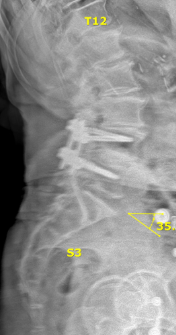
Your spine is an incredible structure. It’s designed with natural curves — a gentle inward curve at the neck, an outward curve at the upper back, and an inward curve at the lower back. These curves aren’t just cosmetic. They work together to absorb shock, distribute weight evenly, and protect your spinal cord. When your posture becomes habitually poor, those natural curves get distorted.
Think about what happens when you slouch forward over a phone or lean to one side at your desk hour after hour. The muscles on one side of your body tighten while the muscles on the other side become weak and overstretched. This imbalance creates a tug-of-war effect on your spine, pulling vertebrae out of their ideal alignment. Over time, this can cause the spinal joints to move improperly, leading to inflammation, muscle spasms, and the kind of chronic back pain that just won’t go away on its own.
Research published by major health organizations, including guidelines from the American College of Physicians, consistently identifies musculoskeletal imbalances — many of which are rooted in postural habits — as contributing factors in chronic low back pain. The good news is that because posture is largely a learned behavior and habit, it can also be unlearned and corrected with the right guidance and care.
Common Causes of Poor Posture
Here in Green Bay, we see patients from all walks of life — office workers, construction workers, student athletes, and retirees — and poor posture can affect anyone, regardless of age or activity level. That said, certain lifestyle patterns make postural problems more likely to develop.
Prolonged sitting is one of the biggest culprits. When you sit for long periods, especially without proper lumbar support, the muscles of your core and lower back fatigue and stop doing their job. Your pelvis may tilt forward or backward, your lower back loses its natural inward curve, and your upper back rounds into a hunched position. Screens make everything worse — the more we look down at phones or lean toward monitors, the more we train our bodies into positions they were never meant to hold for hours on end.
Carrying excess weight, wearing unsupportive footwear, sleeping in awkward positions, and even chronic stress can all negatively influence posture. Stress, in particular, causes many people to physically tense and “guard” their shoulders and upper back, which can lead to a forward-head posture and significant neck and upper-back strain. Repetitive movements at work or in sports can also create muscular asymmetries that slowly pull the spine out of alignment.
Signs Your Posture May Be Contributing to Back Pain
Postural-related back pain doesn’t always announce itself loudly. It often creeps in gradually. One of the clearest signs is pain that gets worse after prolonged sitting or standing and tends to ease up when you move around. If you notice that your back feels stiff and achy first thing in the morning, or that you frequently feel the urge to “crack” your back for relief, postural strain may be playing a role.
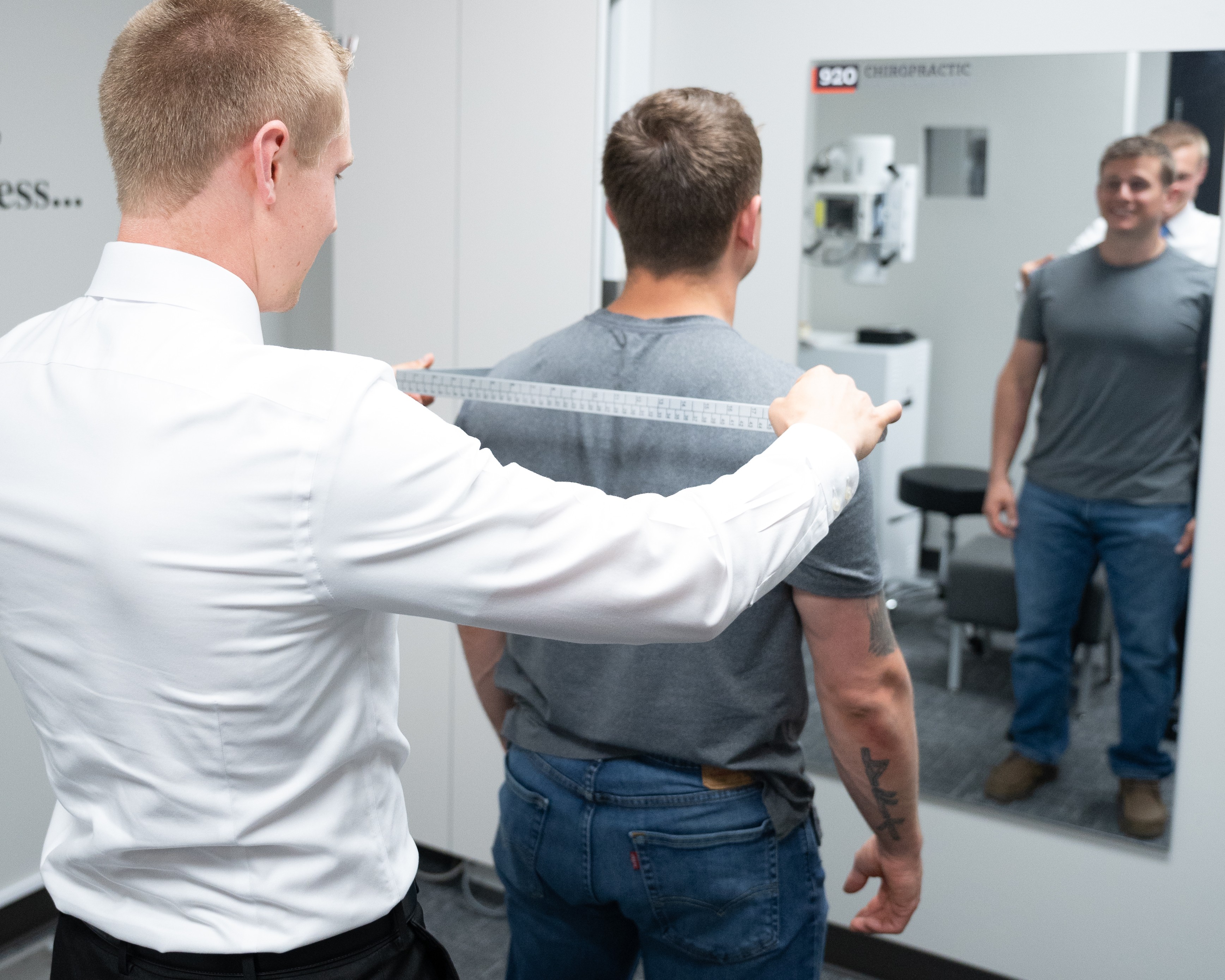
Other signs to pay attention to include uneven shoulder height when you look in a mirror, a head that naturally juts forward in front of your shoulders, or a tendency to lean to one side. Recurring headaches that start at the base of the skull, tightness or discomfort between the shoulder blades, and hip or leg pain that seems to come and go without a clear injury can all be connected to spinal misalignment driven by poor posture.
Dr. Hunter Schultz at 920 Chiropractic Health & Injury Care in Green Bay frequently evaluates patients who come in for headaches or hip problems, only to discover that the root of their discomfort lies in how they’ve been holding their bodies for years. Postural assessment is an important part of understanding the full picture of a patient’s pain.
How Chiropractic Care Addresses Posture and Back Pain
Chiropractic care is uniquely suited to address the relationship between posture and back pain because it focuses on the spine and musculoskeletal system as an integrated whole. Rather than masking pain with medication, chiropractic care aims to identify and correct the underlying mechanical problems contributing to discomfort.
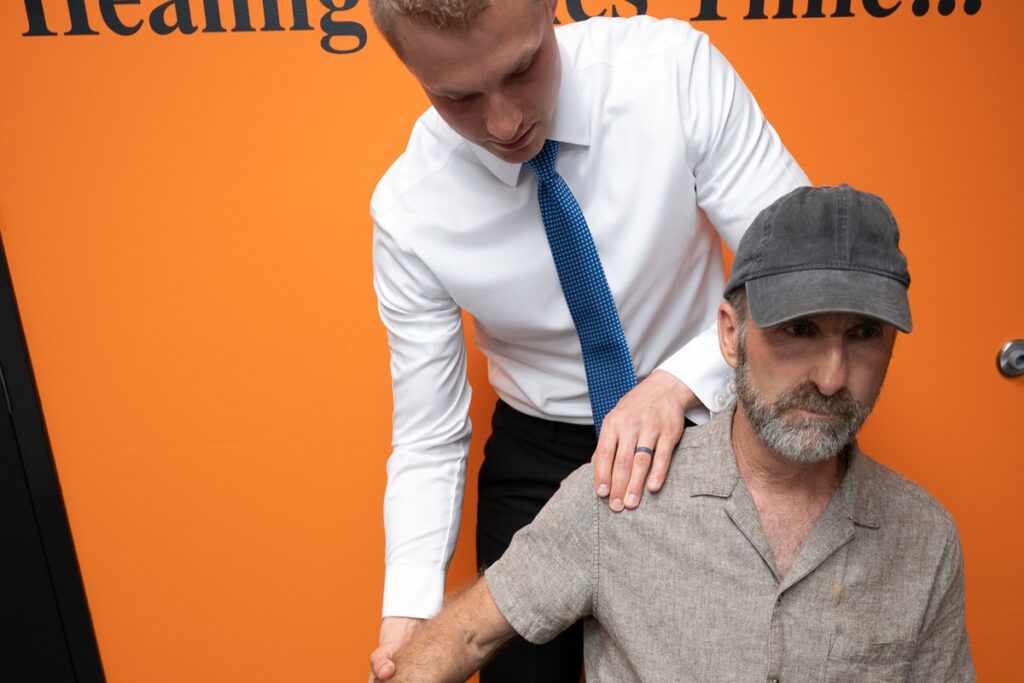
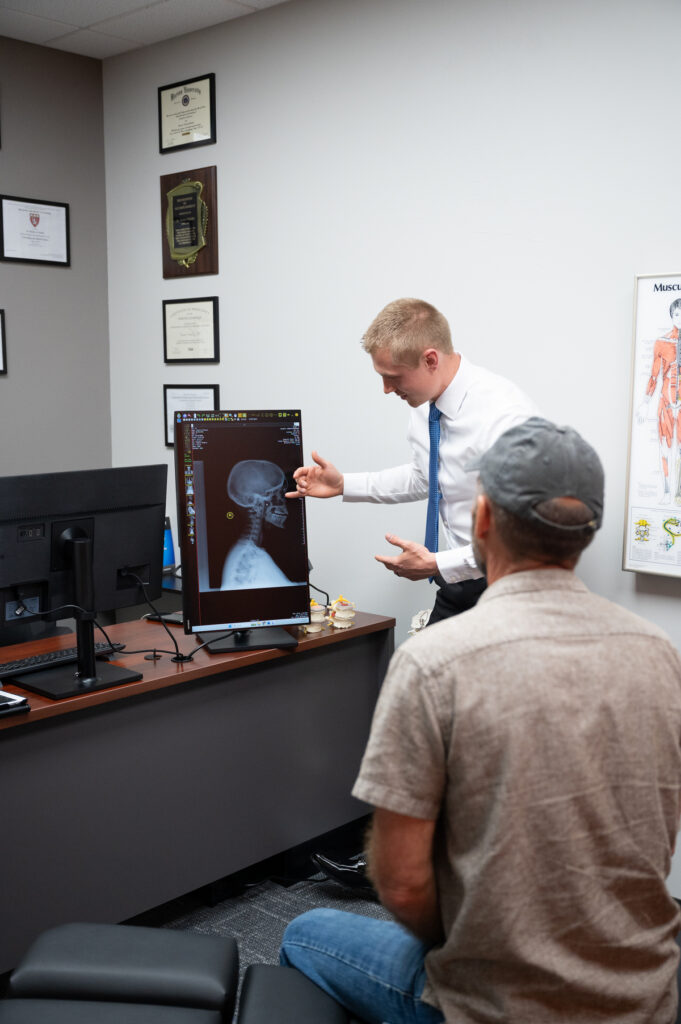
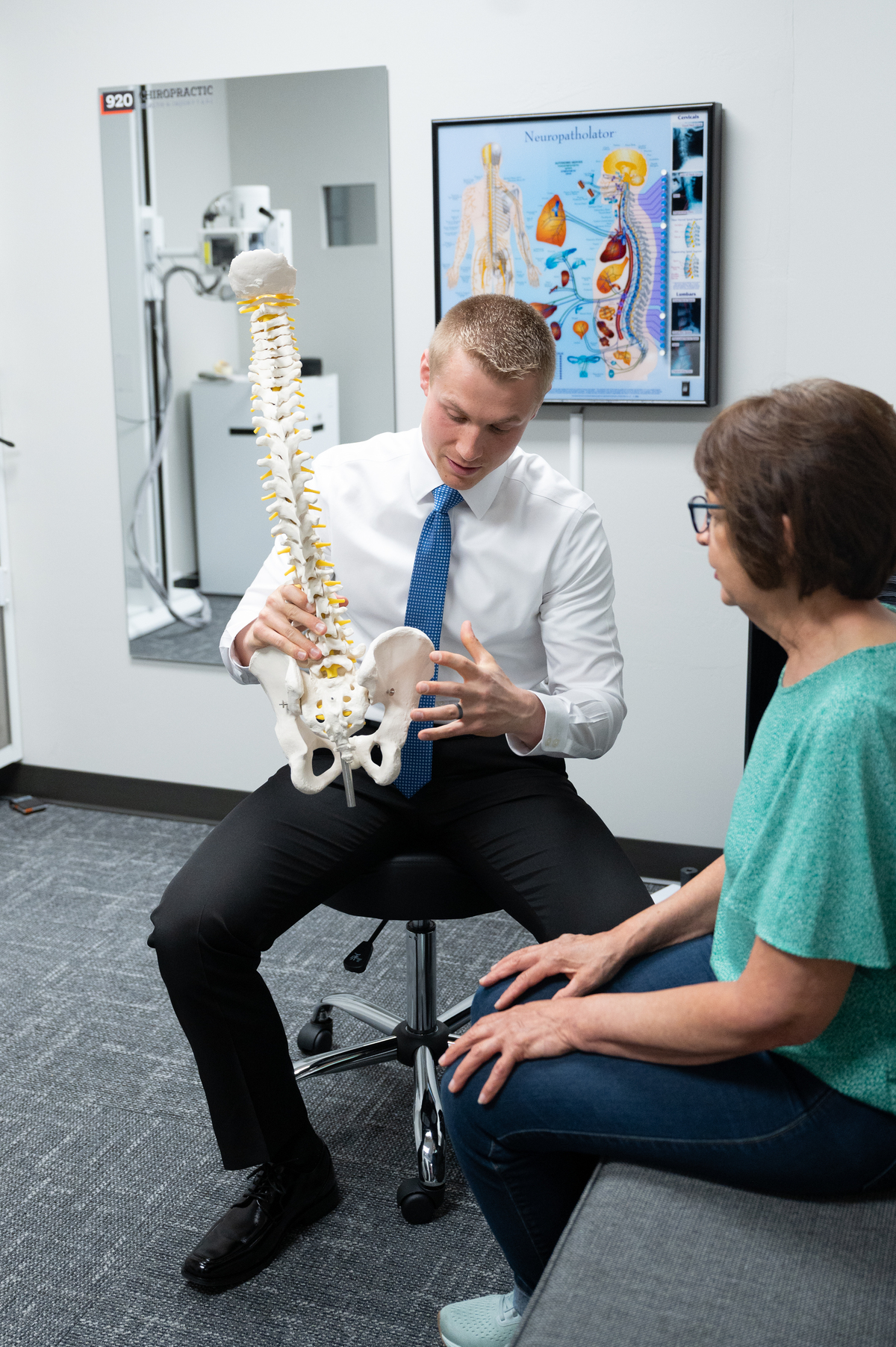
At 920 Chiropractic Health & Injury Care, Dr. Hunter Schultz takes a thorough approach to every patient. This begins with a detailed postural assessment and evaluation of spinal alignment, joint mobility, and muscle balance. Understanding how your body moves — and where it’s breaking down — is the foundation for building an effective care plan.
Chiropractic adjustments are the cornerstone of care. These precise, controlled movements help restore proper motion to spinal joints that have become restricted or misaligned. When joints move the way they’re supposed to, the muscles around them can begin to relax and rebalance. Evidence from organizations like the National Center for Complementary and Integrative Health (NCCIH) and Cochrane reviews indicates that spinal manipulation can be an effective approach for managing both acute and chronic low back pain.
Beyond adjustments, Dr. Hunter Schultz may also incorporate intersegmental traction therapy, or spinal decompression therapy into a patient’s care plan to directly target those problem spots in the spine. Correcting posture isn’t a one-time fix — it requires retraining the neuromuscular system, which takes consistency and time. But the results are lasting in a way that simply treating the pain without addressing the cause never will be.
Practical Tips for Better Posture Every Day
You don’t have to wait until your back pain becomes severe to start making positive changes. Small, consistent adjustments to the way you position your body throughout the day can make a meaningful difference over time. Here are some practical, chiropractor-approved tips to help you move in the right direction.
Start with your workspace. If you work at a desk, your monitor should be at eye level so your head doesn’t have to tilt up or down. Your chair should support the natural curve of your lower back, and your feet should rest flat on the floor with your knees at roughly a 90-degree angle. Standing desks can also be a great tool when alternated with seated work throughout the day.
Be mindful of your phone habits. Looking down at a phone for extended periods dramatically increases the load on your cervical spine. Try holding your phone at eye level as much as possible, and take regular breaks to move your neck through its full range of motion. Even just a few minutes of gentle movement every hour can counteract a lot of postural stress.
Strengthen your core. A strong, engaged core is one of the best natural supports your spine has. Exercises that build deep stabilizing muscles — like gentle bridges, bird-dogs, and planks — can help your body maintain better posture without you having to consciously think about it all the time. Dr. Hunter Schultz and the team at 920 Chiropractic Health & Injury Care can guide you toward exercises that are safe and appropriate for your specific situation.
When to See a Chiropractor
If your back pain has lasted more than a few days, worsens with activity or prolonged sitting, or keeps coming back despite rest and over-the-counter remedies, it’s a good time to seek a professional evaluation. You don’t have to be in severe pain to benefit from chiropractic care — in fact, addressing postural issues early is far easier than trying to reverse years of accumulated damage.
There are, however, some symptoms that warrant prompt medical attention rather than chiropractic care alone. If your back pain is accompanied by numbness or tingling that travels down one or both legs, loss of bladder or bowel control, significant weakness in the legs, or pain following a major injury or fall, please seek immediate medical evaluation. These can be signs of a more serious condition that requires a different level of care. At 920 Chiropractic Health & Injury Care, Dr. Hunter Schultz is trained to recognize these red flags and will refer patients to the appropriate providers when needed.
Posture Habits: Common Mistakes vs. Better Alternatives
|
Posture Mistake |
Better Alternative |
Why It Matters |
|---|---|---|
|
Head forward, chin jutting out |
Head stacked over shoulders, chin slightly tucked |
Reduces strain on cervical spine and neck muscles |
|
Rounded upper back (slouching) |
Gentle chest lift, shoulders back and relaxed |
Maintains thoracic curve and reduces disc pressure |
|
Lower back flattened while sitting |
Use lumbar support to preserve inward curve |
Protects lumbar discs and supporting ligaments |
|
Crossing legs habitually |
Both feet flat on the floor |
Keeps pelvis level and reduces hip imbalance |
|
Looking down at phone for long periods |
Raise phone to eye level; take frequent breaks |
Prevents excess load on cervical vertebrae |
|
Sleeping on stomach |
Side-lying with pillow between knees, or on back |
Supports neutral spinal alignment during rest |
Myths vs. Facts About Posture and Back Pain
Myth: Back pain is just a normal part of getting older and can’t be helped.
Fact: While the spine does change with age, chronic back pain is not something you simply have to accept. Many older adults experience dramatic improvements in comfort and function when posture and spinal alignment are properly addressed. Age is not a barrier to better movement and less pain.
Myth: Good posture means sitting perfectly still and completely upright at all times.
Fact: Perfect stillness is actually hard on the spine. The human body is designed to move. Good posture means maintaining healthy alignment while also shifting positions regularly and allowing your muscles to stay active. Even small movements throughout the day are beneficial.
Myth: Chiropractic adjustments are only for people who have had a major injury.
Fact: Chiropractic care is appropriate for a wide range of people, including those with postural problems, general stiffness, preventive care goals, or mild discomfort. You don’t need to be in crisis to benefit from professional spinal care.
Myth: Posture problems are permanent once they develop.
Fact: The musculoskeletal system is remarkably adaptable. With proper chiropractic care, targeted exercise, and consistent postural habits, meaningful improvements in spinal alignment and muscle balance are entirely achievable for most people.
Myth: Back pain always means something is seriously wrong with your spine.
Fact: The vast majority of back pain episodes are mechanical in nature — meaning they involve muscles, joints, and connective tissue rather than serious structural damage. This is exactly the kind of problem that chiropractic care is designed to address effectively.
Final Thoughts from 920 Chiropractic Health & Injury Care
If there’s one thing we want you to take away from this article, it’s that back pain is not something you just have to live with — and more often than not, the way you’re holding your body is a big part of the story. Posture affects every part of your musculoskeletal health, from the way your joints move to how efficiently your muscles do their job. When posture breaks down, the spine pays the price. But when posture improves, the entire body benefits.
Here in Green Bay, the team at 920 Chiropractic Health & Injury Care is passionate about helping patients understand their bodies, take control of their health, and move through life with greater ease and less pain. Dr. Hunter Schultz brings a thorough, individualized approach to every patient — whether you’re dealing with years of chronic back pain or just starting to notice warning signs you don’t want to ignore.
You don’t have to navigate back pain alone. A comprehensive evaluation is always the best first step, and we’re here to help you every step of the way. We’re proud to serve the Green Bay, WI community and look forward to being a resource you can count on for honest, effective, conservative care.
Frequently Asked Questions
Can chiropractic care actually improve posture, or does it only treat pain?
Chiropractic care addresses both. By restoring proper joint motion and spinal alignment, and by incorporating postural coaching and corrective exercises, chiropractic care can help retrain the body toward healthier positioning over time. Pain relief and postural improvement often go hand in hand.
How long does it take to see improvement in posture with chiropractic care?
This varies depending on how long the postural habits have been present and the individual’s overall health. Some patients notice improvements in comfort and mobility within a few weeks, while more ingrained patterns may take several months of consistent care and exercise. Dr. Hunter Schultz will give you a realistic timeline based on your specific evaluation.
Is it safe to get chiropractic adjustments if I have a history of back problems?
For most people with a history of back pain, chiropractic care is considered safe and appropriate. A thorough intake and examination helps identify any contraindications before care begins. Always share your full health history with your chiropractor so care can be tailored to you safely.
What is the best sleeping position for back pain related to posture?
Side-sleeping with a pillow between the knees or back-sleeping with a pillow under the knees are generally considered the most supportive positions for maintaining spinal alignment. Sleeping on your stomach is usually discouraged, as it puts significant stress on the neck and lumbar spine.
Can children or teenagers have posture-related back pain?
Absolutely. With increased screen time and heavy backpacks becoming the norm, postural issues in young people are more common than ever. Chiropractic care can be appropriate for adolescents, and early intervention often leads to better long-term outcomes.
Do I need a referral to see a chiropractor in Wisconsin?
In Wisconsin, you do not typically need a referral to see a licensed chiropractor. You can contact 920 Chiropractic Health & Injury Care in Green Bay directly to schedule an evaluation with Dr. Hunter Schultz.
TL;DR — Key Takeaways
-
Poor posture disrupts the spine’s natural curves and places uneven stress on muscles, joints, and discs, which is a leading contributor to back pain.
-
Common causes include prolonged sitting, screen use, muscle imbalances, and chronic stress — all very manageable with the right approach.
-
Chiropractic care from Dr. Hunter Schultz at 920 Chiropractic Health & Injury Care in Green Bay addresses both the pain and the postural root causes through spinal adjustments, soft tissue care, and corrective exercise guidance.
-
Daily habits like ergonomic workstation setup, core strengthening, and mindful phone use can significantly support better posture over time.
-
Most back pain is mechanical and very treatable — you don’t have to accept it as permanent, and you don’t have to figure it out alone.