Kids bump, tumble and collide all the time, and most of those knocks are forgotten by dinner. A car crash, a hard fall off the monkey bars or a big hit on the ice can be different. The same quick back-and-forth motion that injures an adult’s neck can injure a child’s, and children are often less able to tell you what hurts.
In this article, Dr. Hunter Schultz walks parents through how whiplash shows up in children, which signs need the emergency room, how a child’s neck injury is evaluated and what gentle, age-appropriate care can look like once serious injury has been ruled out.
What Whiplash Means in a Child
Whiplash is an informal name for a neck sprain or strain caused by a sudden, forceful whip of the head forward and back. The motion can stretch the muscles and ligaments of the neck and irritate the small joints between the vertebrae.
Car crashes are the most familiar cause, but children also hurt their necks in:
- Falls from playground equipment, trampolines, bikes or stairs
- Collisions in hockey, football, soccer and wrestling
- Sledding and skating spills during a Green Bay winter
- Rough play or sudden jolts on amusement rides
If a child’s injury or explanation does not add up, or you are worried about their safety, contact your pediatrician or local child protective services. Shaking or striking a child can cause serious head and neck injury.
Why Kids Are Not Just Small Adults
A young child’s head is large and heavy compared with the rest of the body, and the neck muscles that control it are still developing. The ligaments are looser and the bones of the cervical spine are not fully mature. That combination means a force an adult would shrug off can move a child’s head and neck further and faster.
It also means injuries can look different. Young children may not localize pain to the neck at all. Instead, the change shows up in how they act.
Signs of Whiplash in Children
After any crash, fall or collision, watch your child closely for the next several days. Possible signs include:
- Neck pain or stiffness, or reluctance to turn the head
- Headaches that keep coming back
- Behavior changes such as irritability, clinginess, trouble concentrating or poor sleep
- Tiring more easily than usual
- Dizziness or feeling off balance
- Tingling or numbness in the arms or hands
Several of these overlap with concussion. A child who hit their head, or who has headaches, dizziness, confusion or behavior changes after an injury, needs a medical evaluation for concussion before anything else. You can read more about whiplash symptoms and care on our main page.
Head Injury Comes First: When to Go to the ER
Neck and head injuries often happen together in kids. Skip the chiropractor and go straight to the emergency room, or call 911, if your child has any of the warning signs listed on this page, including loss of consciousness, repeated vomiting, a worsening headache, confusion, unusual sleepiness, weakness or numbness, or severe neck pain after a high-impact crash or fall. Do not move a child you suspect has a serious neck injury; wait for emergency responders.
How a Child’s Neck Injury Is Evaluated
Your pediatrician or an emergency physician should be the first stop after a significant injury. Evaluation usually includes:
- A history of how the injury happened and what symptoms followed
- A physical and neurological exam checking tenderness, range of motion, reflexes, strength and sensation
- Imaging such as X-ray, CT or MRI when the exam or the mechanism of injury calls for it
Once a physician has ruled out fracture, concussion or other serious injury, lingering stiffness and soreness are the kind of musculoskeletal problems that conservative care can address.
Recovery and Treatment Options
Most children with a mild neck strain improve within a few weeks. Care usually involves a mix of:
- Relative rest, then gentle movement. A short break from sports and rough play, followed by a gradual return as symptoms ease. Long periods of keeping the neck still are usually not helpful.
- Guided exercise. Simple range-of-motion and strengthening work, often with a physical therapist.
- Gentle chiropractic care. Once your child has been medically cleared, chiropractic care can focus on easing stiffness and helping the neck move comfortably again.
- Emotional support. A frightening crash can leave kids anxious about car rides or sports. Talk with your pediatrician if worries linger.
What Gentle Pediatric Chiropractic Care Looks Like
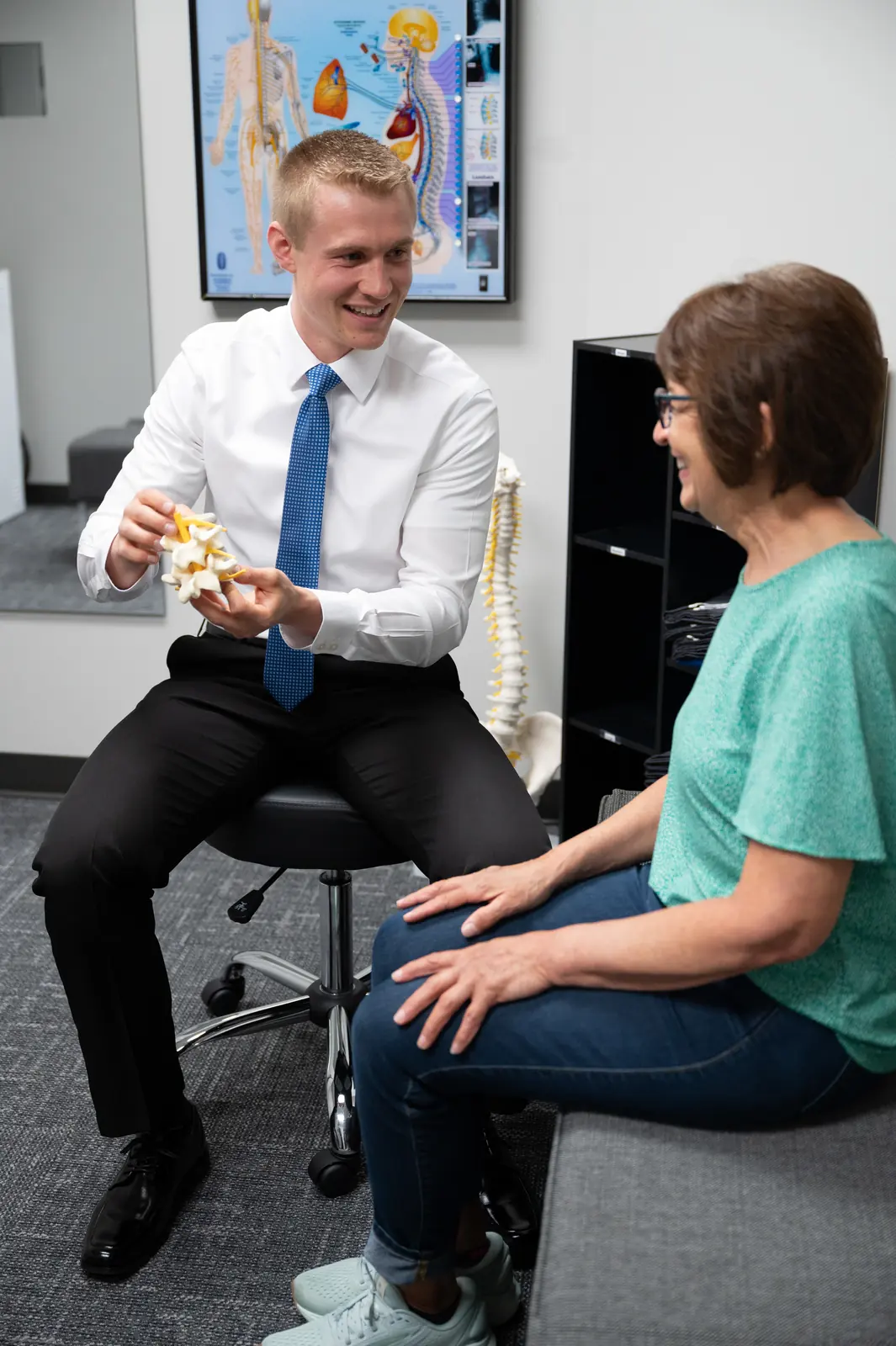
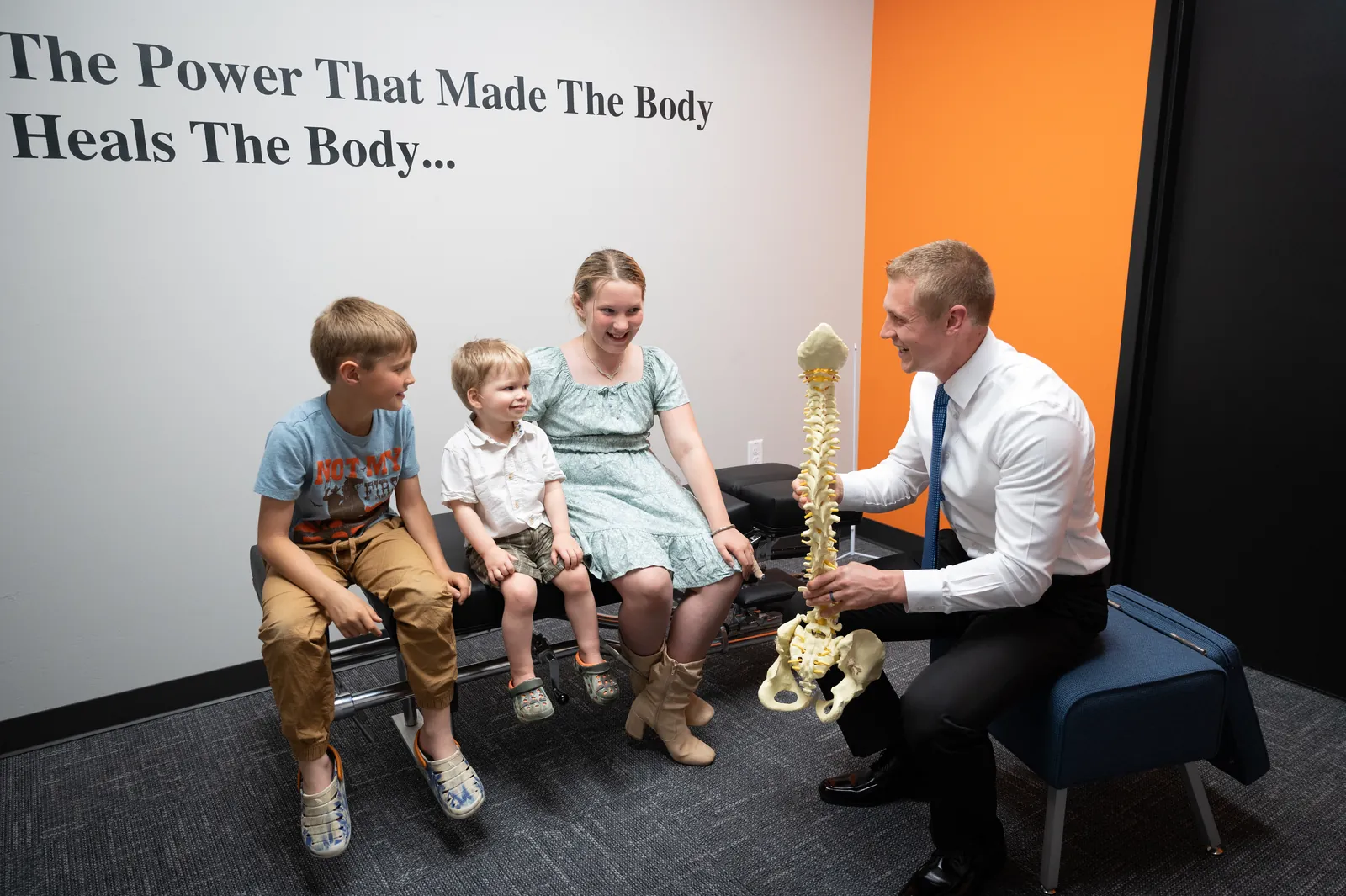
Children are not treated like small adults at our office. A parent or guardian is present for every visit. Dr. Hunter starts with a careful history, asks whether your child has been seen by their pediatrician or an emergency doctor and reviews any imaging or records you bring. The exam is gentle and adapted to your child’s age and comfort.
When care is appropriate, adjustments for children use far less force than adult care. Light pressure, gentle mobilization and simple home exercises are common choices. Care is limited to the muscles and joints of the spine and neck. If anything in the exam suggests a problem outside that scope, we refer you back to your pediatrician. Learn more about our gentle pediatric chiropractic care.
Helping Prevent Neck Injuries in Kids
- Use the right car seat or booster seat for your child’s age, weight and height, installed correctly every time.
- Keep children under 13 in the back seat, and make seat belts non-negotiable once they move out of a booster.
- Insist on helmets and properly fitted protective gear for biking, skating, hockey and football.
- Teach safe tackling and checking technique, and support coaches who enforce it.
- Follow your pediatrician’s guidance on return to sport after any head or neck injury.
Next Steps for Green Bay Families
If your child has been cleared by their doctor but still has a stiff, sore neck weeks after a crash or fall, an evaluation can help. New patients can start with our $18 new patient special, and we will tell you honestly whether chiropractic care is a good fit or whether your child should see their pediatrician again first.
Frequently Asked Questions
Yes. After any significant crash or fall, your pediatrician or an emergency physician should check your child first, especially for concussion and fracture. Once serious injury has been ruled out, gentle chiropractic care can be considered for lingering stiffness or soreness. We are happy to work alongside your child’s doctor and keep them informed.
When a child has been medically evaluated and care is adapted to their age and size, gentle chiropractic care is generally well tolerated. Adjustments for kids use much less force than adult care, and the pressure is kept light. Dr. Hunter screens every child for warning signs first and refers back to the pediatrician when something needs medical attention.
Many children with a mild neck strain feel better within a few weeks. Recovery can take longer after a harder impact, or when a concussion happened at the same time. Ongoing headaches, dizziness or behavior changes should be reviewed by your pediatrician. A gradual return to school, sports and play usually works better than complete rest.
Yes. Young children often cannot describe where it hurts. Instead, you may notice irritability, poor sleep, headaches, tiring easily or avoiding turning their head. Keep an eye on your child for several days after any crash or hard fall, and have them checked if anything seems off. Signs of head injury always need prompt medical care.
Related Care in Green Bay
- Pediatric CareGentle, age-appropriate chiropractic care for infants and kids.
- Auto Injury CareEvaluation and care for neck and back injuries after a crash.
- WhiplashNeck injury from a sudden jolt, often in a crash.
- Neck PainStiff, sore necks from posture, strain or injury.
- HeadachesTension-type and neck-related headaches.
Sources