If you’ve noticed that your shoulders seem uneven, your clothes fit asymmetrically, or you’ve been told your spine curves in an unusual way, you might be wondering about scoliosis. At 920 Chiropractic Health & Injury Care in Green Bay, Wisconsin, we see many patients—both children and adults—who have questions about this common spinal condition. Scoliosis affects millions of people in the United States, and while the term might sound concerning, understanding the different types and what causes them can help remove much of the mystery and worry. Not all scoliosis is the same, and knowing which type you or your loved one may have is the first step toward appropriate care and management.
What is scoliosis? Scoliosis is a sideways curvature of the spine that measures 10 degrees or more when viewed on an X-ray. Instead of running straight down the middle of the back, the spine curves to the left or right, sometimes forming an “S” or “C” shape. This condition can range from mild to severe and may develop at different life stages.
Table of Contents
- Understanding Scoliosis: More Than Just a Curved Spine
- Idiopathic Scoliosis: The Most Common Type
- Congenital Scoliosis: Present from Birth
- Neuromuscular Scoliosis: Related to Nervous System Conditions
- Degenerative Scoliosis: Developing in Adulthood
- Functional Scoliosis: Caused by External Factors
- How Chiropractic Care Fits Into Scoliosis Management
- Daily Management and Lifestyle Considerations
- When to Seek Professional Evaluation
- Myths vs. Facts About Scoliosis
- Final Thoughts from Our Green Bay Practice
Understanding Scoliosis: More Than Just a Curved Spine
When we think about the spine, we often picture a straight line running from the neck to the lower back. In reality, a healthy spine has natural front-to-back curves that help with shock absorption and balance. Scoliosis is different. It involves an abnormal side-to-side curvature that can also include rotation of the vertebrae themselves.
This three-dimensional nature of scoliosis is important to understand. The spine doesn’t just curve sideways—it can also twist, making one shoulder blade appear more prominent than the other or causing the ribcage to protrude on one side. The degree of curvature is measured using something called a Cobb angle on X-rays, with curves greater than 10 degrees meeting the diagnostic criteria for scoliosis.
Here at 920 Chiropractic Health & Injury Care, we explain to our Green Bay patients that scoliosis exists on a spectrum. Some people have very mild curves that never progress or cause symptoms. Others may experience noticeable postural changes, discomfort, or in severe cases, complications affecting breathing or heart function. The type of scoliosis, the age at which it develops, and its severity all play crucial roles in determining the best approach to management.
Research indicates that approximately 2-3% of the population has some degree of scoliosis, though many cases are mild and require only monitoring. Girls are more likely than boys to have curves that progress and require treatment. Understanding which category of scoliosis applies to you or your child helps set realistic expectations and guides decision-making about care options.
Idiopathic Scoliosis: The Most Common Type
The word “idiopathic” means that the exact cause is unknown, and this type accounts for about 80% of all scoliosis cases. While we don’t know precisely why idiopathic scoliosis develops, research suggests there are genetic factors at play. If you have a family member with scoliosis, your risk is higher than the general population.
Idiopathic scoliosis is further divided into subcategories based on the age when it’s first identified. Infantile idiopathic scoliosis appears before age three and is quite rare. Juvenile idiopathic scoliosis develops between ages three and ten. The most common form is adolescent idiopathic scoliosis, which appears between ages 10 and 18, typically during the growth spurt years.
Many parents in Green Bay bring their teenagers to our practice after a school screening or a pediatrician’s observation. They’re often relieved to learn that most adolescent idiopathic scoliosis cases are mild and don’t progress significantly. The risk of progression is highest during periods of rapid growth, which is why monitoring during the pre-teen and teenage years is so important.
Evidence indicates that hormonal factors, neurological development, and biomechanical forces during growth all contribute to the development of idiopathic scoliosis. The spine’s rapid lengthening during puberty may unmask underlying asymmetries or create conditions where curves can develop. Girls tend to have a higher risk of curve progression, particularly curves that develop before the first menstrual period.
What makes idiopathic scoliosis challenging is its unpredictability. Two children with similar initial curve measurements may have completely different outcomes—one curve might remain stable while another progresses rapidly. This is why regular monitoring through growth years is essential, allowing healthcare providers to track changes and intervene when necessary.
Congenital Scoliosis: Present from Birth
Congenital scoliosis develops in the womb when the vertebrae don’t form properly or fail to separate correctly during fetal development. This is the rarest type of scoliosis, affecting approximately one in every 10,000 newborns. Unlike idiopathic scoliosis, congenital scoliosis has a clear structural cause that’s present from birth, even if it’s not always immediately apparent.
There are several patterns we see with congenital scoliosis. Sometimes vertebrae don’t form completely, creating a wedge-shaped bone that causes the spine to curve. Other times, vertebrae that should be separate remain fused together, restricting growth on one side of the spine and leading to progressive curvature as the child grows.
What concerns us at 920 Chiropractic Health & Injury Care when we encounter potential congenital scoliosis is that it often accompanies other developmental issues. Children with congenital scoliosis may have kidney abnormalities, heart defects, or problems with their spinal cord. This is why thorough evaluation and coordination with other healthcare specialists is crucial when congenital scoliosis is identified.
The progression of congenital scoliosis can be difficult to predict. Some curves remain stable throughout childhood, while others progress steadily regardless of growth spurts. The location and type of vertebral abnormality largely determine how the curve will behave over time. Curves in the upper spine tend to be more concerning because they can affect chest development and breathing.
Parents often ask whether anything could have been done to prevent congenital scoliosis. The answer is that vertebral formation happens very early in pregnancy—during the first six to eight weeks—often before a woman even knows she’s pregnant. No specific preventive measures are currently known, and it’s not caused by anything the mother did or didn’t do during pregnancy.
Neuromuscular Scoliosis: Related to Nervous System Conditions
Neuromuscular scoliosis develops as a secondary condition in people who have disorders affecting their nerves, muscles, or both. When the muscles that support the spine are weakened or imbalanced due to underlying neurological conditions, the spine can curve over time. This type of scoliosis is often more severe and more likely to progress than idiopathic types.
Common underlying conditions that can lead to neuromuscular scoliosis include cerebral palsy, muscular dystrophy, spina bifida, spinal cord injuries, and other neuromuscular diseases. The scoliosis develops because the normal muscular support system for the spine is compromised. Without balanced muscle tone and strength on both sides of the spine, gravity and positioning can gradually pull the spine into a curved position.
At our Green Bay practice, we see some patients with mild neuromuscular involvement who benefit from supportive chiropractic care as part of their broader healthcare team. The curve pattern in neuromuscular scoliosis is often long and sweeping, sometimes involving the entire spine from top to bottom. This can create challenges with sitting balance, positioning, and comfort.
What makes neuromuscular scoliosis particularly challenging is that it tends to progress even after skeletal maturity. Unlike idiopathic scoliosis, which typically stabilizes once growth is complete, neuromuscular curves can continue worsening throughout life if the underlying condition is progressive. This ongoing progression means that individuals with neuromuscular scoliosis often require more intensive monitoring and intervention.
The management approach for neuromuscular scoliosis is highly individualized and must take into account the person’s overall functional abilities, the underlying condition’s progression, and quality of life factors. Maintaining mobility, preventing pressure sores, supporting respiratory function, and ensuring comfort are all important considerations that go beyond just addressing the spinal curve itself.
Degenerative Scoliosis: Developing in Adulthood
While many people think of scoliosis as a childhood condition, adult-onset or degenerative scoliosis is actually quite common among older adults here in Wisconsin and nationwide. Also called de novo scoliosis, this type develops later in life due to age-related changes in the spine’s supporting structures.
As we age, the discs between our vertebrae can lose height and hydration, the facet joints can develop arthritis, and the ligaments can weaken. When these degenerative changes happen asymmetrically—more on one side than the other—the spine can gradually curve. This process typically begins after age 50 and becomes more prevalent with each passing decade.
Many adults who come to 920 Chiropractic Health & Injury Care with back pain are surprised to learn they’ve developed scoliosis. Unlike adolescent scoliosis, which is often painless, degenerative scoliosis frequently causes discomfort. The pain usually stems from the arthritic changes, muscle fatigue from compensating for the imbalance, or nerve compression when the degenerative process narrows the spaces where nerves exit the spine.
Research shows that degenerative scoliosis is more common in women than men, possibly due to hormonal changes after menopause that affect bone density and disc health. The curves are typically in the lumbar spine and tend to be less severe than other types, though they can still significantly impact quality of life through pain and limitations in standing and walking tolerance.
One distinguishing feature of degenerative scoliosis is that the curve often comes with a forward shift or slip of one vertebra on another, a condition called spondylolisthesis. This combination can create more complex symptoms including leg pain, numbness, or weakness when walking. The stenosis that often accompanies degenerative scoliosis—narrowing of the spinal canal—can cause neurogenic claudication, where the legs feel heavy and weak after standing or walking for even short periods.
Functional Scoliosis: Caused by External Factors
Functional scoliosis, sometimes called non-structural scoliosis, is fundamentally different from the types we’ve discussed so far. In functional scoliosis, the spine itself is structurally normal, but it appears curved due to external factors. The most common causes are leg length discrepancies or muscle spasms that pull the spine temporarily out of alignment.
When one leg is shorter than the other, the pelvis tilts, and the spine compensates by curving to keep the head and eyes level. This creates a visible curve that looks like scoliosis on examination, but the individual vertebrae are normal, and the spine is straight when the leg length difference is corrected with a heel lift or orthotic. We see this fairly often at our Green Bay practice, and it’s usually straightforward to identify and address.
Muscle spasms from injury or irritation can also cause temporary functional scoliosis. When muscles on one side of the spine contract strongly, they can pull the spine into a curved position. This type of functional curve typically resolves once the underlying muscle problem is addressed through appropriate care and the muscle spasm subsides.
What’s important to understand about functional scoliosis is that it’s correctable. When you bend forward or lie down, the curve often disappears or significantly reduces. This is different from structural scoliosis, where the curve remains visible even when changing positions. The flexibility of functional curves makes them generally easier to address with conservative approaches.
Another cause of functional scoliosis that we occasionally see is related to pain avoidance. When someone has severe back pain, hip problems, or other conditions causing one-sided discomfort, they may unconsciously shift their weight and posture to avoid the painful area. This protective positioning can create a temporary spinal curve that looks like scoliosis but resolves when the underlying pain source is properly addressed.
How Chiropractic Care Fits Into Scoliosis Management
At 920 Chiropractic Health & Injury Care, we want to be clear about what chiropractic care can and cannot do for scoliosis. Chiropractic care does not cure or permanently correct structural scoliotic curves, and any claims to the contrary should be viewed with skepticism. However, chiropractic care can play a valuable supportive role in managing symptoms and maintaining function for many people with scoliosis.
For individuals with mild to moderate scoliosis, particularly adults with degenerative changes or functional curves, chiropractic adjustments may help improve spinal mobility and reduce muscle tension. The goal isn’t to straighten the spine but to optimize function within the context of the existing curve. Many of our Green Bay patients report that regular chiropractic care helps them maintain their activity levels and manage discomfort associated with their scoliosis.
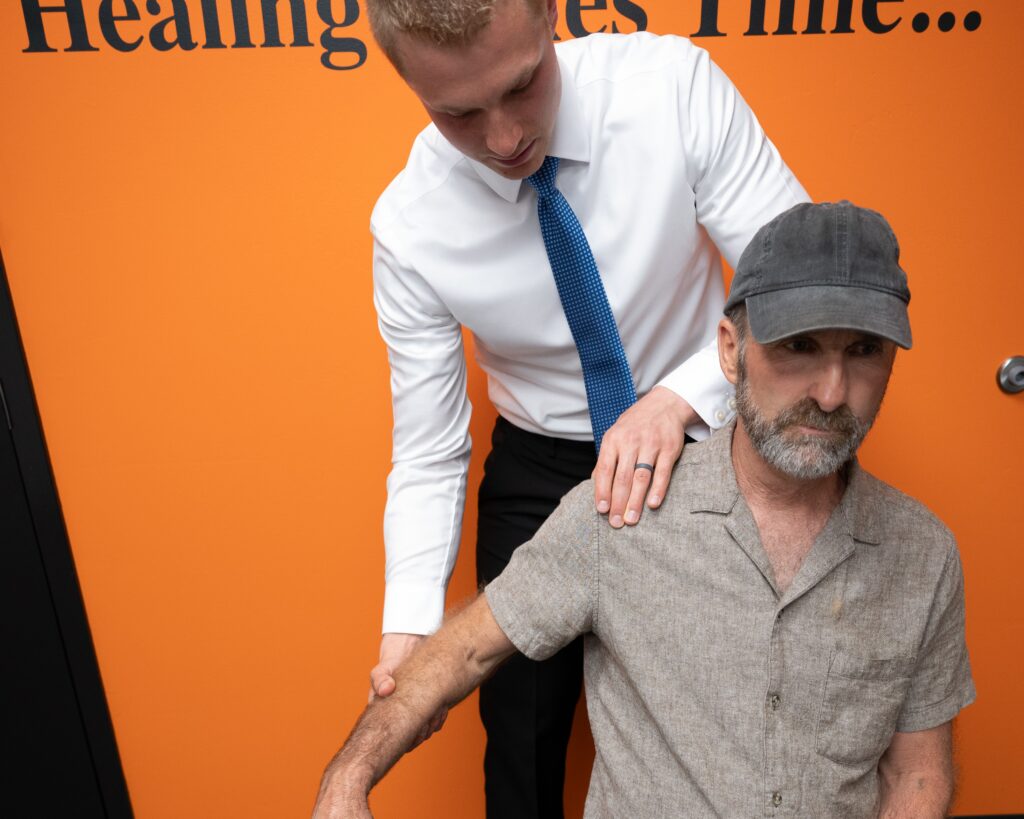
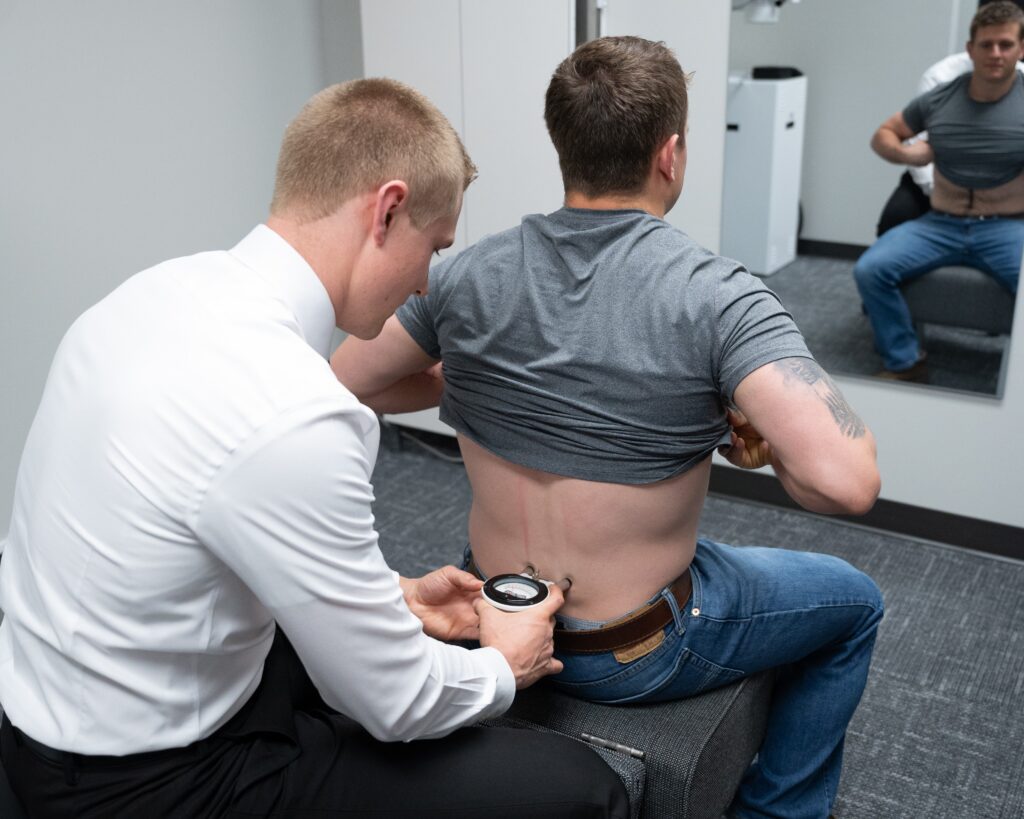
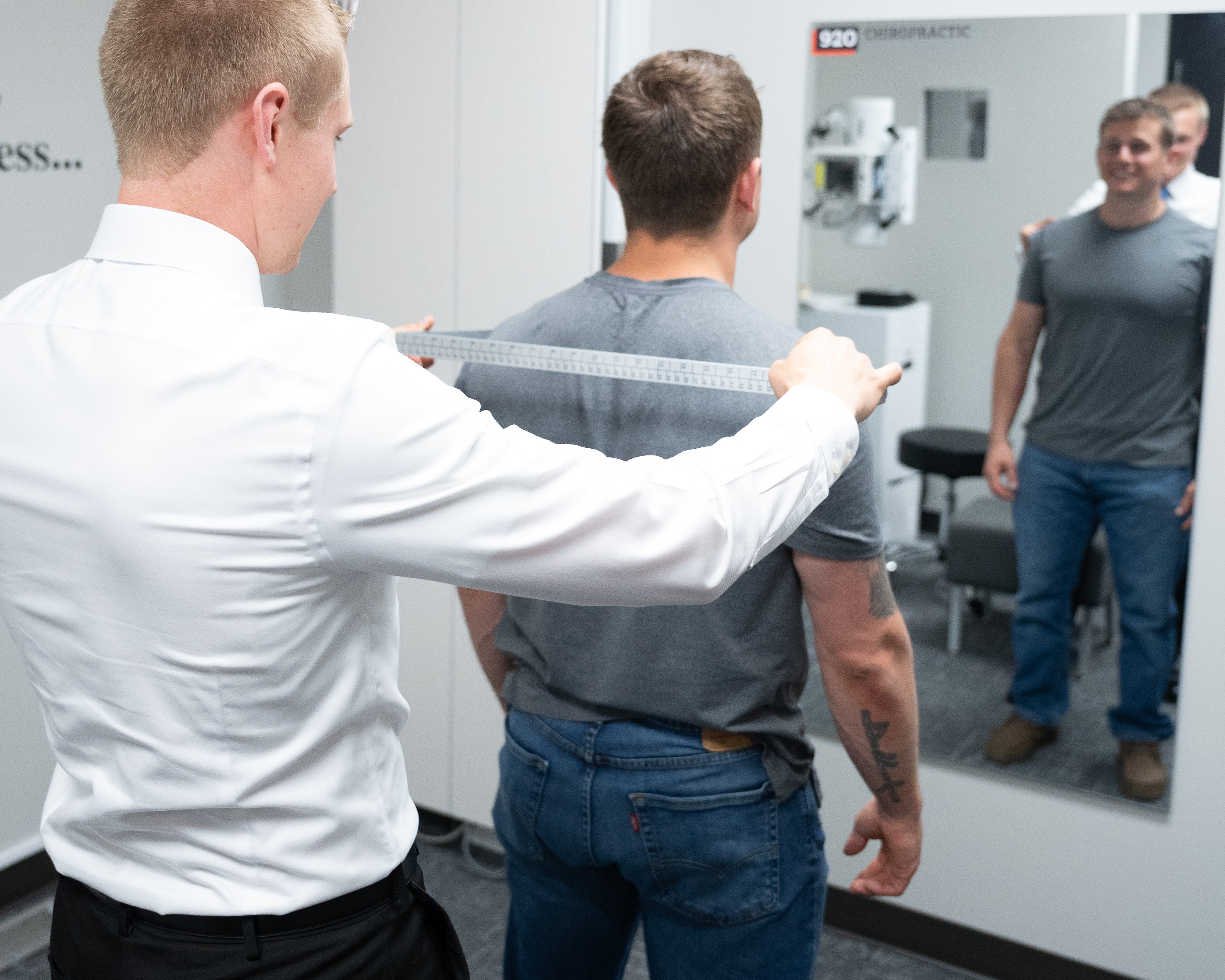
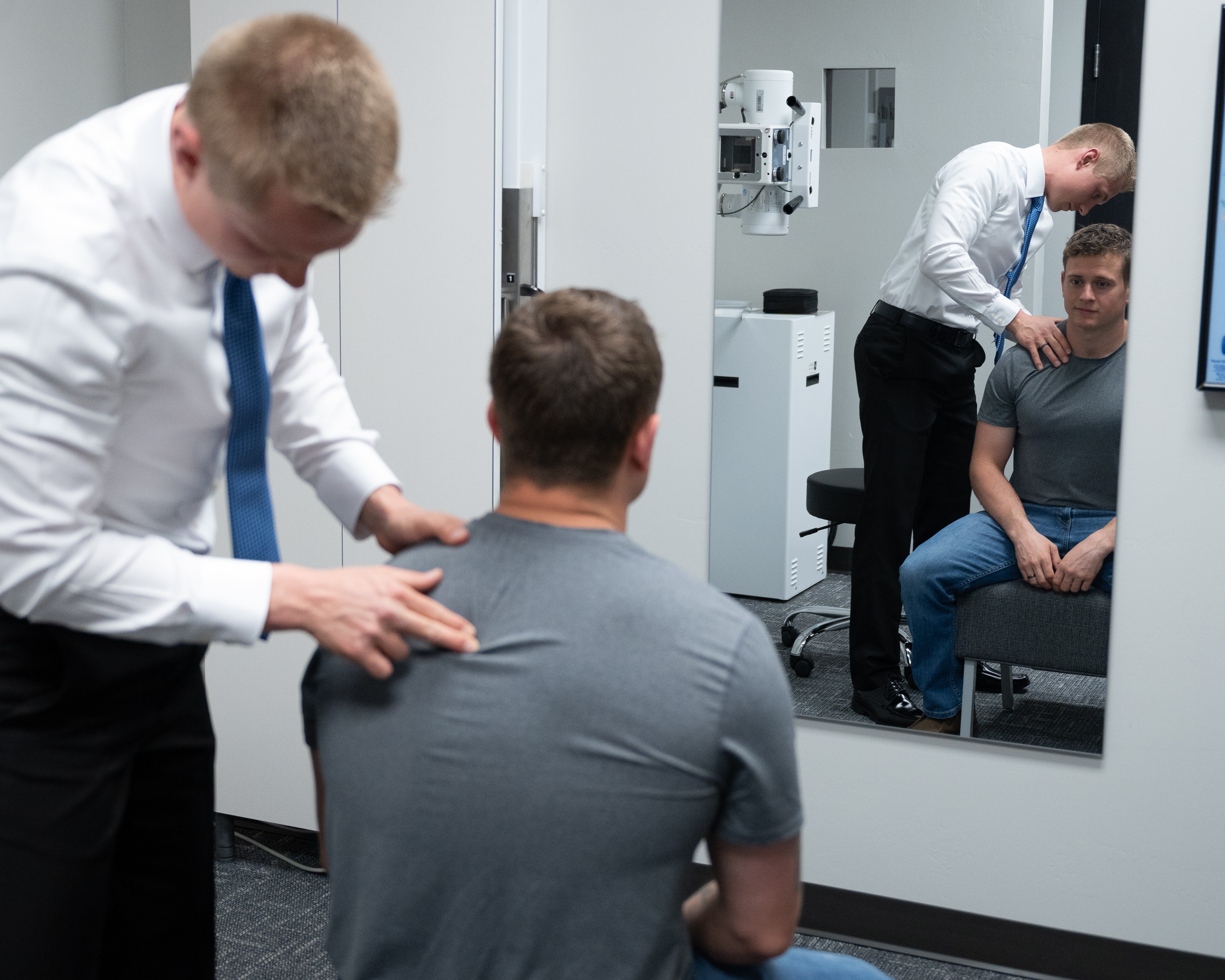
Our approach involves careful assessment of each patient’s specific presentation. We evaluate posture, spinal mobility, muscle balance, and how the scoliosis affects daily function. Treatment plans are individualized and may include spinal adjustments to areas of restricted movement, soft tissue work to address muscle imbalances, and rehabilitative exercises to improve core stability and postural awareness.
For functional scoliosis caused by leg length differences or muscle imbalances, chiropractic care combined with appropriate orthotics or exercises can sometimes lead to significant improvement in the curve appearance and symptoms. For structural scoliosis, the benefits are more about symptom management and functional optimization rather than curve correction.
Evidence suggests that manual therapies including chiropractic care may benefit some adults with scoliosis-related pain, though research is ongoing. The key is setting appropriate expectations and working as part of a broader healthcare team when needed. We regularly coordinate care with orthopedists, physical therapists, and other specialists to ensure our patients receive comprehensive management suited to their specific type and severity of scoliosis.
| Type of Scoliosis | Primary Cause | Typical Age of Onset | Progression Risk |
|---|---|---|---|
| Idiopathic | Unknown (likely genetic factors) | Adolescence (10-18 years) | Moderate during growth |
| Congenital | Vertebral malformation in womb | Birth (detected in infancy/childhood) | Variable, often progressive |
| Neuromuscular | Underlying nervous system disorder | Childhood, varies by condition | High, often continues into adulthood |
| Degenerative | Age-related spinal changes | After age 50 | Slow but progressive |
| Functional | External factors (leg length, muscle spasm) | Any age | Low, often correctable |
Daily Management and Lifestyle Considerations
Living with scoliosis doesn’t have to mean living with limitations. Most people with mild to moderate curves live fully active lives without significant restrictions. Understanding how to support your spine through daily choices can make a meaningful difference in comfort and function.
Maintaining core strength is one of the most important things you can do regardless of scoliosis type. A strong core provides natural support for the spine and can help reduce the compensatory strain that scoliosis creates. Exercises that emphasize balanced strength on both sides of the body are particularly valuable. Swimming, Pilates, and yoga are popular choices among our patients in Green Bay, though any activity that promotes strength and flexibility can be beneficial.
Posture awareness makes a difference, though it’s important to understand that good posture won’t prevent curve progression in structural scoliosis. What it can do is reduce muscle fatigue and discomfort. Being mindful of how you sit, stand, and move throughout the day helps minimize the extra stress that scoliosis places on muscles working to keep you upright and balanced.
For people with degenerative scoliosis, maintaining a healthy weight reduces mechanical stress on the spine. Extra body weight increases the load that an already-compromised spine must support, potentially accelerating degeneration and increasing discomfort. Even modest weight reduction can lead to noticeable improvements in symptoms for some individuals.
Sleep positioning can affect comfort, especially for adults with scoliosis. Many people find that sleeping on their side with a pillow between the knees helps maintain spinal alignment. Others prefer sleeping on their back with a pillow under the knees. Experimenting with different positions and pillow placements can help you find what works best for your specific curve pattern.
Staying active is crucial. While certain activities may need modifications based on curve severity and symptoms, regular movement helps maintain flexibility, strength, and cardiovascular health. Many of our patients participate in recreational sports, exercise classes, and outdoor activities throughout their lives despite having scoliosis. The key is listening to your body and making adjustments when needed rather than avoiding activity altogether.
When to Seek Professional Evaluation
If you notice changes in posture—shoulders at different heights, one shoulder blade appearing more prominent, waistline asymmetry, or clothes hanging unevenly—it’s worth having an evaluation. For children and adolescents, many schools conduct scoliosis screenings, but not all do, and some cases are missed. Regular pediatric checkups should include posture assessment, but parents can also watch for signs at home.
Adults developing new back pain after age 50, especially if accompanied by postural changes or difficulty standing upright for extended periods, should seek evaluation. While not all back pain indicates scoliosis, changes in spinal alignment can be a sign of degenerative processes that benefit from early attention and appropriate management.
Progressive changes warrant professional evaluation. If you or your child has known scoliosis and you notice the curve appears to be worsening—even if it’s not causing pain—reassessment is important. For adolescents going through growth spurts, monitoring every four to six months during rapid growth phases helps catch progression early when interventions are most effective.
Pain that interferes with daily activities, sleep, or quality of life should never be ignored. While mild scoliosis is often painless, moderate to severe curves, degenerative scoliosis, and neuromuscular types can cause significant discomfort. There are many management options available, and living with severe pain is not necessary or advisable.
Certain red flag symptoms require immediate medical attention rather than routine evaluation. These include sudden weakness in the legs, loss of bowel or bladder control, severe pain that doesn’t respond to rest or usual measures, numbness or tingling in multiple areas, or fever accompanying back pain. These symptoms could indicate serious neurological compromise or other conditions requiring urgent medical care beyond what chiropractic can provide.
Myths vs. Facts About Scoliosis
Myth: Carrying a heavy backpack causes scoliosis
Fact: While heavy backpacks can cause back pain and poor posture, they do not cause structural scoliosis. Idiopathic scoliosis develops due to genetic and developmental factors, not from external loads or activities. However, proper backpack use is still important for overall spinal health and comfort.
Myth: Scoliosis can be cured through exercise or chiropractic adjustment
Fact: Structural scoliosis involves changes in the shape and alignment of the vertebrae themselves and cannot be permanently corrected through exercise or adjustments. However, these approaches can help manage symptoms, improve function, and maintain strength and flexibility. They play a supportive role but don’t eliminate the structural curve.
Myth: All scoliosis gets worse over time
Fact: Many mild scoliosis curves remain stable throughout life, particularly after skeletal maturity is reached. The risk of progression depends on factors including curve severity, location, type of scoliosis, and age at detection. Most adolescent idiopathic curves under 30 degrees don’t progress significantly after growth is complete.
Myth: Scoliosis always requires surgery
Fact: The vast majority of people with scoliosis never need surgery. Only severe curves—typically over 45-50 degrees—that are progressing or causing significant functional problems may warrant surgical consideration. Most cases are managed through observation, exercise, or supportive care depending on the severity and symptoms.
Myth: You can tell if someone has scoliosis just by looking at their back
Fact: While visible signs like uneven shoulders or waist asymmetry can suggest scoliosis, diagnosis requires proper evaluation including measurement. Mild curves may not be visible to the casual observer, and some postural asymmetries are not scoliosis at all. X-rays with Cobb angle measurement are the gold standard for diagnosis and monitoring.
Final Thoughts from Our Green Bay Practice
Understanding the different types of scoliosis and their causes is empowering. Whether you’re a parent concerned about your child’s posture, an adult noticing changes in your own spine, or someone already diagnosed seeking more information, knowledge removes much of the fear and uncertainty surrounding this condition. At 920 Chiropractic Health & Injury Care, we’re committed to helping our Green Bay community understand their spinal health and make informed decisions about care.
Every scoliosis case is unique, with its own pattern, severity, and impact on daily life. What works beautifully for one person may not be appropriate for another, which is why individualized assessment and management planning are so important. If you have concerns about scoliosis for yourself or a family member, we encourage you to seek professional evaluation rather than worrying in silence.
Most people with scoliosis live active, fulfilling lives without significant limitations. With appropriate monitoring, supportive care when needed, and attention to overall spinal health through exercise and lifestyle choices, scoliosis becomes just one aspect of who you are rather than a defining limitation. Our team in Green Bay is here to support you with accurate information, conservative care options, and guidance throughout your journey with this condition.
Frequently Asked Questions About Scoliosis
Can scoliosis develop suddenly in adults?
Degenerative scoliosis develops gradually over years as age-related changes accumulate in the spine. While you might notice the curve or symptoms suddenly, the underlying process has been occurring over time. Some adults had mild childhood scoliosis that went undiagnosed and becomes more apparent with age-related changes.
Is scoliosis hereditary?
There is a genetic component to idiopathic scoliosis. If you have a close family member with scoliosis, your risk is higher than the general population. However, many people with scoliosis have no family history, and the inheritance pattern is complex rather than straightforward, likely involving multiple genes.
Will my child’s scoliosis affect their ability to play sports?
Most children with mild to moderate scoliosis can participate fully in sports and physical activities. In fact, staying active is beneficial for maintaining strength and flexibility. Only severe curves or those with specific complications might require activity modifications, and these decisions should be made with your healthcare provider.
Does scoliosis affect pregnancy?
Most women with scoliosis have normal, healthy pregnancies and deliveries. Mild to moderate curves typically don’t complicate pregnancy or childbirth. Women with severe curves or those who’ve had spinal fusion surgery should discuss their specific situation with their obstetrician, but most can carry and deliver babies safely.
Can scoliosis cause breathing problems?
Severe thoracic curves—those in the upper and middle back—can potentially affect lung capacity if the curve restricts chest expansion. This is typically only a concern with curves exceeding 70-80 degrees or in neuromuscular types. Mild to moderate scoliosis doesn’t affect breathing or respiratory function.
Should children with scoliosis sleep on special mattresses?
There’s no evidence that specific mattress types affect scoliosis curve progression. Comfort is the primary consideration. Choose a mattress that provides adequate support and allows your child to sleep comfortably. The same general principles that apply to healthy spines—avoiding overly soft mattresses that don’t provide support—apply to those with scoliosis.
TL;DR – Key Takeaways
- Scoliosis is a sideways spinal curvature of 10 degrees or more with several distinct types, each with different causes and progression patterns.
- Idiopathic scoliosis accounts for 80% of cases, appears during growth years, and has genetic factors though the exact cause remains unknown.
- Other types include congenital (vertebral malformations from birth), neuromuscular (secondary to nervous system disorders), degenerative (adult-onset from aging changes), and functional (from external factors like leg length differences).
- Most scoliosis cases are mild, don’t require surgery, and can be managed with monitoring, exercise, and supportive care when appropriate.
- Chiropractic care doesn’t cure structural scoliosis but can help manage symptoms, improve function, and support overall spinal health as part of a comprehensive approach to living well with the condition.