
How to Choose a Chiropractor in Green Bay: 8 Things to Check
Searching “chiropractor near me” in Green Bay? Eight simple checks, from the state license to the first exam, to help you find the right fit.
Spine care in Green Bay
A stiff, sore neck can make it hard to check your blind spot, get through a workday or sleep comfortably. Neck pain treatment at 920 Chiropractic in Green Bay starts with Dr. Hunter Schultz finding where your pain is coming from, then using gentle, specific adjustments to help you turn your head with less pain.
$18 first visit for new patients. No referral needed.
Neck pain is one of the most common reasons people see a chiropractor. Your neck balances the weight of your head all day while still letting you turn, tilt and nod. Most neck pain is mechanical, meaning it comes from the small joints, discs, muscles and ligaments of the cervical spine rather than from a serious illness. That kind of pain often responds well to conservative, hands-on care.
Still, two people with “a sore neck” can have very different problems. One may have tight muscles from hours of screen time. Another may have an irritated nerve that sends tingling into the hand. That is why neck pain treatment at our Green Bay office begins with a conversation and an exam, not with an adjustment.
Neck problems rarely stay put. Tight, irritated joints in the upper neck can feed headaches that start at the base of the skull. Lower in the neck, a bulging disc or narrowed opening can irritate a nerve root as it leaves the spine, causing pain, burning, numbness or weakness that travels into the shoulder blade, arm or hand. This is often called a pinched nerve, and it needs a careful exam so care can be matched to it.
Neck trouble shows up differently for everyone. These are the patterns we hear about most:
Looking down at phones and laptops for hours keeps the neck muscles working overtime. See poor posture.
Sleeping in an awkward position, a sudden turn or a long day of overhead work can strain the muscles that hold up your head.
When the small joints of the neck stop moving well, they can become sore and stiff and make nearby muscles guard.
A bulging or herniated disc in the neck can cause local pain and, if it presses on a nerve, symptoms into the arm. See disc injury.
Over time, discs and joints in the neck change and can stiffen. See arthritis.
Car crashes, falls and contact sports can injure the neck, and symptoms sometimes show up a day or two later. See whiplash.
Stress plays a part too, since many people carry tension in their neck and shoulders. Often several of these factors overlap.
Your plan is built from your exam findings and your goals, and every step is explained before it happens.
When did it start, and does it travel into your arm? Your answers also screen for warning signs that need medical care first.
Dr. Hunter checks how each level of your neck moves, along with posture, muscle tension, reflexes, arm strength and sensation.
After an injury, with long-standing pain or with certain exam findings, on-site spinal X-rays can show alignment, disc spacing and joint changes.
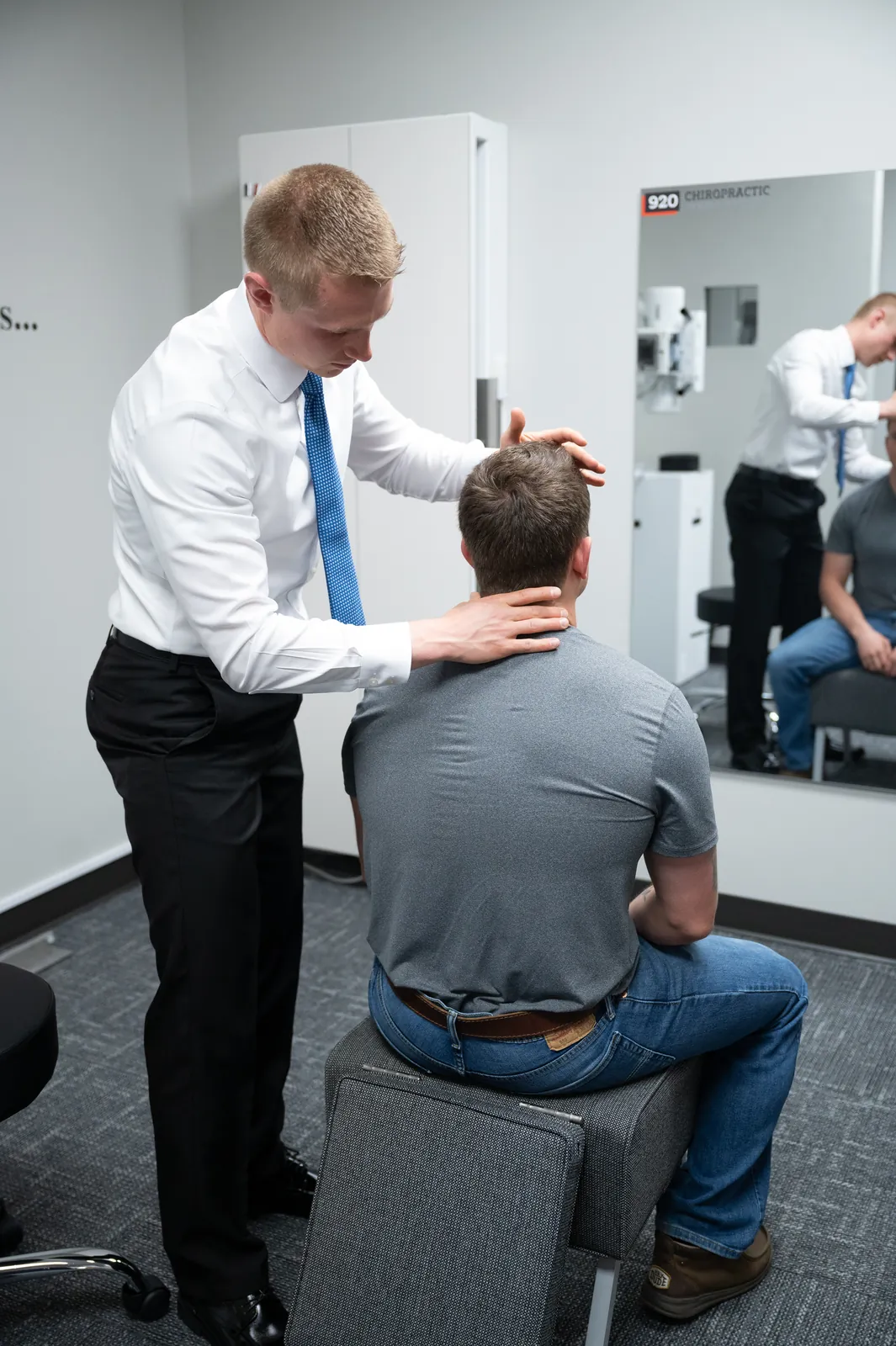
Specific hands-on chiropractic adjustments, including the Gonstead technique, aim to restore motion in stiff segments. If you prefer not to have your neck adjusted by hand, just say so and Dr. Hunter will use gentler options.
For disc-related neck pain, spinal decompression may be considered. Intersegmental traction can help loosen a stiff upper back that loads the neck.
Stretches, strengthening exercises and simple workstation and sleep changes help you keep the progress you make in the office.
No two necks recover on the same schedule, but care tends to move through a few phases.
Paperwork, a consultation, a hands-on exam, a written report of findings and, when it is appropriate, your first treatment. New patients can start with our $18 new patient special.
Visits are usually closer together while we work on calming irritated tissue and restoring motion. Many people notice turning their head gets easier.
Dr. Hunter re-examines your neck and updates the plan, or refers you if things aren’t improving as expected.
As pain settles, visits spread out and the focus moves to posture, strength and habits that help prevent flare-ups. Ongoing wellness visits are optional.
Move slowly, breathe and stay in a comfortable range. Stop any stretch that sharpens your pain or sends symptoms into your arm.
Stretching can ease tension, but it doesn’t tell you why your neck hurts. If pain keeps coming back, an exam is the next step.
 2:48
From your first exam to how often you come in and how progress is checked. Read the video summary.
Neck adjustments are generally considered safe when a trained chiropractor performs them after a proper exam. The most common side effect is mild soreness for a day or so. Serious complications are rare, but they have been reported, so Dr. Hunter screens your history first. If you would rather not have a manual neck adjustment, tell Dr. Hunter. Gentler options are available, and you can always say no.
It depends on what is causing the pain and how long it has been there. A recent strain often settles faster than stiffness that has built up over years of desk work, and nerve-related arm symptoms usually take longer. Dr. Hunter will give you a clear plan after your exam and re-check your progress so you know whether care is working.
Yes. Irritated joints and tight muscles in the upper neck can refer pain into the head, a pattern called a cervicogenic headache. An irritated nerve root lower in the neck can cause pain, tingling or numbness in the arm and hand. Learn more on our headaches and pinched nerve pages.
Sleeping on your back or side is usually easiest on the neck. Pick a pillow that keeps your head level with your spine, not propped up or tipped down. Side sleepers often need a slightly thicker pillow than back sleepers. Stomach sleeping forces your head to stay turned for hours, so it is worth trying to change that habit.
You don’t need a referral to see us. X-rays are not automatic. Dr. Hunter takes them on site when your history or exam suggests they will change your care, such as after a car accident or fall. If you already have recent imaging, bring the report and we will review it with you. Call (920) 933-8080 to book.
Sources
From the 920 blog
Practical tips for your back, neck and joints, plus what is happening in our Green Bay community.
Searching “chiropractor near me” in Green Bay? Eight simple checks, from the state license to the first exam, to help you find the right fit.

Green Bay averages more than 55 inches of snow a year. How to warm up, shovel smarter, use a snow blower safely and know when to get help.

Coolers, cold bleachers and three hours of cheering. Simple ways Green Bay fans can protect their back and neck from tailgate to final whistle.
Want us to write about something? Suggest a topic or ask Dr. Hunter at your next visit.
Talk to a real person at our Green Bay office. We’ll answer your questions and find a time that works for you.
(920) 933-8080Rather not call? Book online any time.
New patients start with our $18 first visit: consultation, exam, X-rays if needed and an adjustment.
Schedule your first visit online Contact us