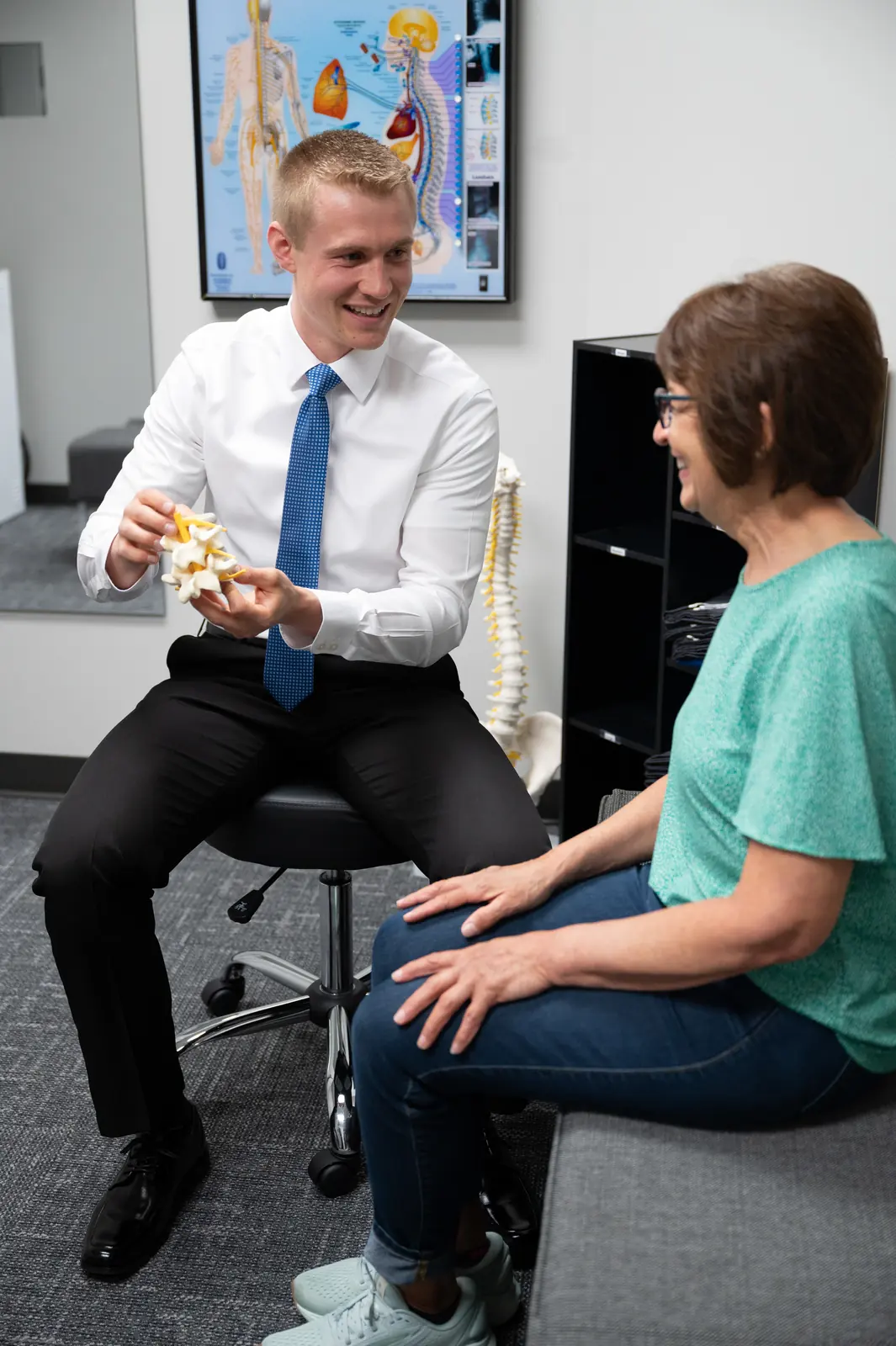
When back pain hangs around for months, it starts to shape your whole day: how long you can sit at work, whether you can get down on the floor with your kids, and how well you sleep. If that sounds familiar, you are not alone, and you are not out of options.
At our office, Dr. Hunter Schultz sees many people who have tried rest, heating pads and over-the-counter pills and still feel stuck. This article explains what makes back pain chronic, where chiropractic care fits, and how to build a plan that holds up over time.
What Makes Back Pain “Chronic”?
Back pain is usually called chronic when it lasts 12 weeks or longer, even after the original injury or trigger has been treated. Some people have a steady, dull ache. Others feel fine for a while and then flare up after yard work, a long drive or a stressful week.
Chronic back pain rarely has just one cause. Common contributors include:
- Stiff joints in the low or mid back that no longer move well
- Disc changes, including bulging or worn discs
- Muscle guarding, where muscles stay tense to protect a sore area
- Long hours of sitting and poor posture habits
- Old injuries that never fully recovered
- Poor sleep, stress and low activity, which can make pain feel louder
Because so many things can play a part, a careful exam matters more than any single treatment.
How Chiropractic Care Fits Into Chronic Back Pain Treatment
Spinal manipulation is one of several nondrug approaches that health agencies list for low back pain, along with exercise, physical therapy, massage and mind-body practices such as yoga. Research suggests it may offer modest relief for many people, and results vary from person to person.
Chiropractic care for long-lasting back pain aims to restore normal motion to joints that are stiff or not moving well. When a joint moves better, nearby muscles often relax and everyday movements can feel easier. Rather than chasing pain alone, Dr. Hunter looks at how your spine moves, how you sit and lift, and what your days involve, so your plan addresses the patterns that keep pain going.
You can read more about how we evaluate and treat back pain in Green Bay on our symptom page.
Techniques We Use for Long-Lasting Back Pain
No two backs are the same, so your plan depends on your exam, your comfort and your goals. Depending on what we find, care may include:
- Gonstead technique adjustments: precise, hands-on adjustments to specific spinal joints, guided by a detailed exam of how each segment moves.
- Intersegmental traction: a table with rollers that gently moves the spine segment by segment to encourage motion.
- Spinal decompression: a slow, controlled stretch that may help when disc problems are part of the picture.
- Spine-X imaging: on-site spinal X-rays when your history or exam calls for them.
Your first visit includes a consultation, a hands-on exam and a written report of findings before treatment begins, so you know what we found and why we are recommending a plan.
What Many Patients Notice Over Time
Chronic pain usually improves gradually, not all at once. With a consistent plan, many patients find that:
- They can sit, stand or drive longer before pain sets in
- Morning stiffness eases sooner
- Flare-ups happen less often or settle faster
- Bending, lifting and turning feel more natural
Some people also find they reach for pain relievers less often. If you take prescription pain medication, never change or stop it without talking with the doctor who prescribed it. We are glad to work alongside your medical team.
We will also tell you honestly if you are not responding as expected. If your exam or progress points to something that needs medical testing or a different kind of care, Dr. Hunter will explain why and help you find the right provider.
Making Chiropractic Part of Your Pain Management Plan
Adjustments are most useful as one piece of a bigger plan. The habits you build between visits often decide how well your progress lasts. Here is what we usually encourage:
- Keep moving. Gentle walking and the home exercises we show you help keep joints and muscles from stiffening up again.
- Change positions often. If you sit for work, stand up or shift positions every 30 to 60 minutes.
- Lift with care. Keep loads close to your body and avoid twisting while you lift, whether it’s groceries or a shovel full of snow.
- Protect your sleep. A supportive pillow and a position that keeps your spine neutral can make mornings easier.
- Stay in touch with your doctor. Chronic pain can overlap with other health conditions, so keep your primary care provider in the loop.
As pain settles, visits usually spread out. Some patients choose periodic check-ins through wellness care, while others simply come back if a flare-up starts. The choice is always yours.
Take the First Step
If back pain has been part of your life for months or years, a thorough evaluation is a good place to start. New patients can begin with our $18 new patient special, and you can call (920) 933-8080 with questions before you book.
Frequently Asked Questions
It depends on how long you have had pain, what is driving it and how you respond to care. Some people notice easier movement within the first few visits, while long-standing problems usually improve more gradually over several weeks. Dr. Hunter re-checks your progress along the way and will tell you honestly if a different approach or a referral makes more sense.
For most people, spinal manipulation by a licensed chiropractor is considered safe. Mild soreness for a day or two is the most common side effect. Serious complications are rare. A careful history and exam come first, so we can screen for problems such as fractures, infection or nerve damage that need medical care instead.
Not always. Dr. Hunter decides based on your history and exam. If X-rays would help, for example after a fall or when pain has lasted a long time, they can be taken on site with Spine-X. If your exam suggests you need other imaging, such as an MRI, we will explain why and help you get it through the right provider.
Yes, and we encourage it. Chronic back pain often benefits from a team approach that may include your primary care provider, a physical therapist or other professionals. Keep taking any prescribed medications as directed, and let each provider know what care you are receiving so your plan stays coordinated and safe.
Related Care in Green Bay
- Chiropractic CareHands-on adjustments based on a thorough exam and, when needed, X-rays.
- Gonstead TechniqueA precise, specific adjusting method guided by careful analysis.
- Spinal DecompressionGentle, controlled traction for disc-related back and neck pain.
- Back PainLow and mid-back pain, stiffness and spasms.
- Poor PostureTech neck, rounded shoulders and desk posture.
- Disc InjuryBulging or herniated discs in the neck or back.
Sources