
How to Choose a Chiropractor in Green Bay: 8 Things to Check
Searching “chiropractor near me” in Green Bay? Eight simple checks, from the state license to the first exam, to help you find the right fit.
Spine care in Green Bay
Pain that starts in your low back or buttock and shoots down one leg is often sciatica. At our Green Bay office, sciatica treatment begins with a careful search for what is irritating the nerve, so Dr. Hunter Schultz can build a plan to help you sit, walk and sleep more comfortably.
$18 first visit for new patients. No referral needed.
Sciatica is not a diagnosis on its own. It is a name for a pattern of symptoms that happens when the sciatic nerve, or one of the nerve roots that form it, gets compressed or irritated. Good sciatica treatment depends on figuring out where and why that is happening.
The sciatic nerve is the largest nerve in your body. It forms from several nerve roots that leave the lower spine, passes through the buttock, and runs down the back of each leg, branching to supply the muscles and skin of the lower leg and foot. Because it covers so much ground, irritation near the spine can be felt far away, even in your toes.
Not every pain in the back of the leg is sciatica. A tight hip muscle, an irritated sacroiliac (SI) joint, a hip problem or nerve damage from diabetes can all send pain or tingling into the leg. Sciatica is a lower-body problem; tingling in the arms or hands points to a different source, such as a pinched nerve in the neck.
The good news is that many sciatica episodes improve over a period of weeks with conservative care. For Green Bay patients, sorting out the source early means less guesswork and a plan aimed at what is actually irritating the nerve.
Sciatica tends to affect one side of the body. You may notice one or several of these:
Symptoms in both legs, weakness that is getting worse, or any change in bladder or bowel control are not typical sciatica. They need medical attention right away (see the warning signs below).
Several different problems can irritate the nerve. Knowing which one you have changes the plan.
The most common cause. Disc material can press on a nerve root as it leaves the spine. Learn more about disc injuries.
Narrowing of the spaces around the nerves, more common after age 50. Leg pain often builds with walking and eases when you sit or lean forward.
Wear-and-tear changes in the spinal joints can crowd the openings where nerves exit. See arthritis.
In spondylolisthesis, one vertebra shifts forward on the one below it, which can narrow the space for a nerve root.
Changes in posture, weight and ligaments can irritate the low back and pelvis. Our prenatal care is adapted for every stage.
A tight piriformis muscle deep in the buttock, or hours at a desk or behind the wheel, can add to irritation along the nerve.
Stiff joints in the low back or pelvis can also add to the problem, which is why the exam covers your spine, pelvis and hips.
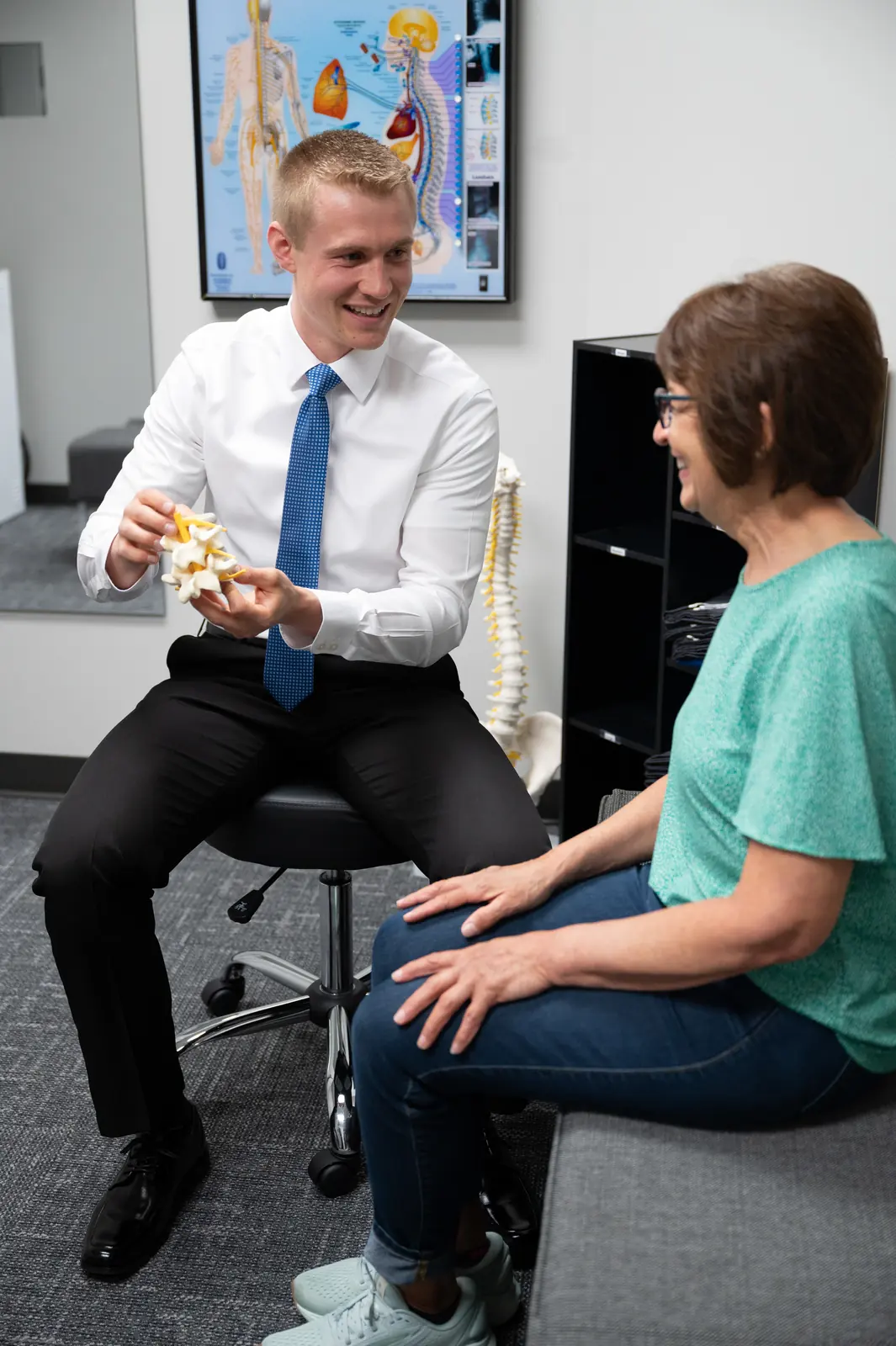
Dr. Hunter explains each step before anything is done, and you can ask questions along the way.
Where does it start? How far down the leg does it go? Which positions help? This pattern is a strong clue to the source, so we take time on it.
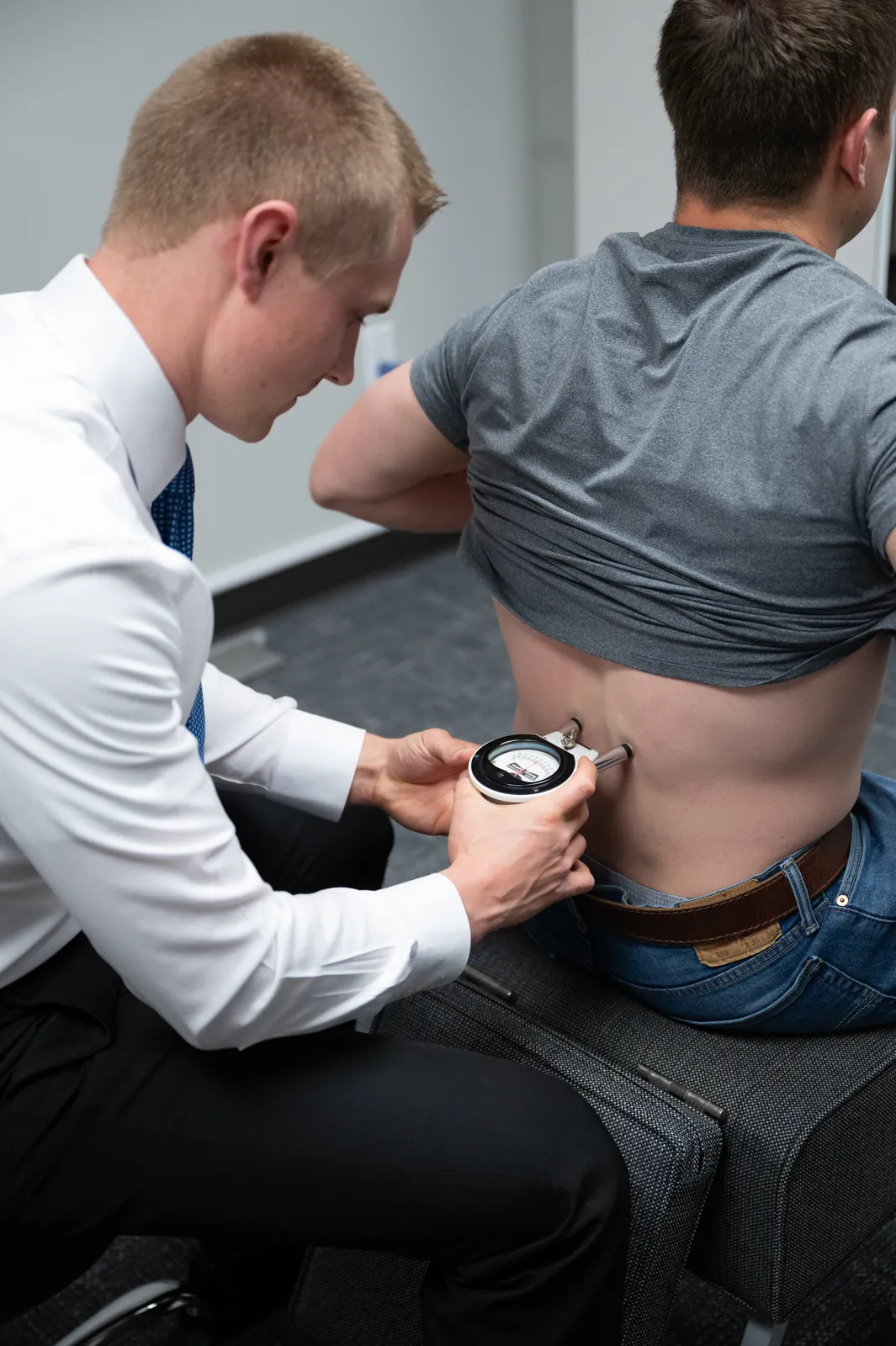
Your exam checks reflexes, muscle strength and skin sensation in both legs, plus movement tests for the low back, pelvis and hips. It also screens for anything that needs a medical referral.
When your history or exam calls for it, on-site spinal X-rays show alignment, disc spacing and arthritic changes. X-rays do not show discs or nerves directly, so if symptoms are severe or not improving, you may be referred for an MRI.
Care may include precise chiropractic adjustments using the Gonstead technique.
For disc-related sciatica, spinal decompression may be part of your plan. Intersegmental traction can gently mobilize stiff segments.
You leave with simple guidance on sitting, sleeping and lifting so the nerve can calm down between visits.
Gentle movement usually helps more than rest, but some popular stretches can stir up an irritated nerve. These three are generally well tolerated. Move slowly, breathe, and never bounce.
Stop if a stretch sends pain or tingling farther down your leg. That is a sign the nerve is being irritated. Hard hamstring stretches and straight-leg raises are often too much during a flare. Ask Dr. Hunter which movements fit your exam findings.
Recovery depends on the cause, how long you have had symptoms and your overall health. A typical course looks like this:
Consultation, exam, X-rays if needed, a written report of findings and, when appropriate, your first treatment. New patients can start with our $18 new patient special.
Visits are usually closer together at first. A common early sign of progress is leg pain easing or moving up toward the back, even before the back itself feels better.
As symptoms quiet, visits spread out and the focus moves to core strength, hip mobility and sitting habits that protect the nerve.
Progress is rechecked along the way. If you are not improving as expected, or anything is getting worse, Dr. Hunter will refer you for further testing or a medical opinion.

Why leg pain can start in the low back, and practical next steps if you have sciatica. Read the video summary.
Many people with sciatica do well with conservative care, and chiropractic care is one option. Spinal manipulation has been studied for low back pain with sciatica, with modest benefits in some research. Dr. Hunter’s goal is to reduce irritation on the nerve, restore motion and teach you how to protect your back. If your exam suggests something that needs medical care, he will tell you and refer you.
It varies. Many episodes improve over several weeks, while sciatica tied to stenosis or long-standing disc changes may take longer and can come and go. Some people notice change after a few visits; others need a steadier plan. After your exam, Dr. Hunter will give you a realistic outlook and recheck your progress along the way.
Usually not. Most people with sciatica do not need an MRI at the start. An MRI is typically recommended when symptoms are severe, keep getting worse, include weakness, or do not improve with several weeks of care, or when surgery is being considered. If your exam points that way, Dr. Hunter will refer you to your physician.
For most people, gentle movement is better than bed rest. Short walks, changing positions often and easy stretches tend to help, while long sitting and heavy lifting tend to aggravate the nerve. If an activity sends pain farther down the leg, back off and let us know.
Yes, with care that is adapted for pregnancy. Dr. Hunter adjusts positioning and technique for comfort and uses the Webster technique when appropriate. Learn more on our prenatal care page. Always let your OB or midwife know about new or severe symptoms, especially any of the warning signs listed above.
New patients can begin with our $18 new patient special. Call (920) 933-8080 to ask about the next available appointment. After your exam and report of findings, Dr. Hunter will explain the recommended plan so you can decide what fits. You can also review our payment options.
Sources
From the 920 blog
Practical tips for your back, neck and joints, plus what is happening in our Green Bay community.
Searching “chiropractor near me” in Green Bay? Eight simple checks, from the state license to the first exam, to help you find the right fit.

Green Bay averages more than 55 inches of snow a year. How to warm up, shovel smarter, use a snow blower safely and know when to get help.

Coolers, cold bleachers and three hours of cheering. Simple ways Green Bay fans can protect their back and neck from tailgate to final whistle.
Want us to write about something? Suggest a topic or ask Dr. Hunter at your next visit.
Talk to a real person at our Green Bay office. We’ll answer your questions and find a time that works for you.
(920) 933-8080Rather not call? Book online any time.
New patients start with our $18 first visit: consultation, exam, X-rays if needed and an adjustment.
Schedule your first visit online Contact us