A stiff, achy neck can make everything harder: checking your blind spot, sleeping through the night, even focusing at work. Most neck pain comes from muscles, joints and posture rather than a serious problem, and many people want to manage it without relying on medication.
This guide covers practical, drug-free steps you can take, where chiropractic care fits in, and when neck pain needs a medical visit instead.
Why Your Neck Hurts
Your neck holds up a heavy head all day while turning, tilting and looking down at screens. Common reasons it gets sore include:
- Posture strain: leaning toward a laptop or looking down at a phone for long stretches
- Muscle tension: stress often shows up as tight shoulders and a stiff upper neck
- Sleep position: a pillow that is too high, too flat or stomach sleeping can leave you stiff in the morning
- Joint stiffness: small joints in the neck that are not moving well
- Injury: a car crash or sports collision can cause whiplash
- Wear and tear: age-related changes in the discs and joints
Chiropractic Care as a Drug-Free Option for Neck Pain
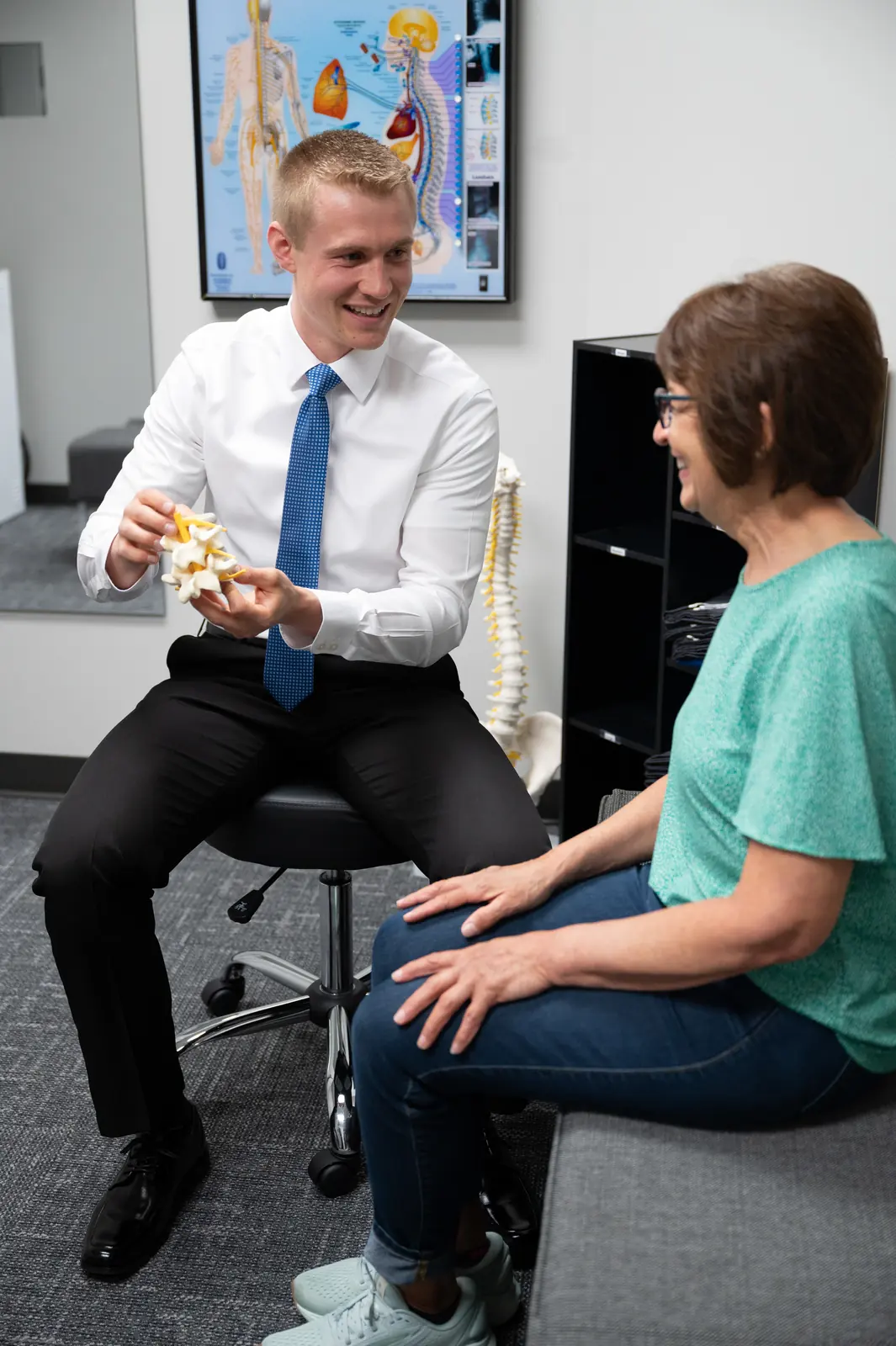
At our office, Dr. Hunter Schultz starts with a conversation and a hands-on exam to see how your neck moves, where it is stiff and whether nerves seem irritated. X-rays are taken on site only when your history or exam calls for them.
If chiropractic care is a good fit, treatment may include precise chiropractic adjustments to restore motion in stiff neck joints, and advice on posture and home stretches. Research suggests spinal manipulation and mobilization may help some people with neck pain, and results vary. Some patients feel looser right after a visit, while others improve more gradually over several sessions.
Learn more about how we approach neck pain treatment in Green Bay.
Gentle Stretching and Yoga
Slow, gentle movement helps keep neck muscles and joints from stiffening. Yoga and simple stretches can also ease stress, which often feeds neck tension. Try these a few times a day:
- Chin tucks: sit tall and gently draw your chin straight back, as if making a double chin. Hold for a few seconds and repeat 5 to 10 times.
- Side bends: tip your ear toward your shoulder until you feel a light stretch. Hold 15 to 20 seconds per side.
- Shoulder rolls: roll your shoulders up, back and down slowly, 10 times.
- Gentle turns: turn your head slowly to look over each shoulder, staying in a comfortable range.
Move slowly and never force a stretch. Stop if pain spreads into your arm, gets worse, or you feel dizzy.
Posture, Screens and Your Workspace
Small daily habits add up. Many people find that a few changes reduce how often their neck flares up:
- Raise your monitor so the top of the screen is near eye level.
- Hold your phone higher instead of dropping your head to look at it.
- Take a short break every 30 to 60 minutes to stand, roll your shoulders and look away from the screen.
- Use a chair that supports your low back so your head stays balanced over your shoulders.
- Use a headset for long calls instead of cradling the phone.
If slouching is a constant battle, our page on poor posture has more ideas.
Sleep Setup and Hydration
Aim for a pillow that keeps your head level with your spine. Back and side sleeping are usually easier on the neck than stomach sleeping, which twists your head to one side for hours. Drinking enough water through the day is part of general health, even if it is not a neck treatment by itself. If you wake up stiff most mornings, take a look at how old your pillow is and how you are positioned when you fall asleep.
A Careful Word About Herbal Remedies
Some people try turmeric, ginger, peppermint or chamomile tea, or lavender for relaxation. The evidence that these ease neck pain is limited, and “natural” does not always mean safe. Turmeric supplements, for example, can interact with some medications and may not be safe during pregnancy. Willow bark contains a compound related to aspirin, so it carries similar cautions.
Talk with your doctor or pharmacist before starting any supplement, especially if you take prescription medication, have a bleeding disorder, or are pregnant or nursing.
Mindfulness and Relaxation
Stress and neck pain often travel together. When you are tense, your shoulders creep up and your neck muscles tighten. A few minutes of slow belly breathing, a short guided meditation or a walk outside can help your muscles let go. Try taking five slow breaths before you start the car or open your laptop. Regular physical activity you enjoy, such as walking, swimming or biking, can also help with stress and keep your upper body moving.
When to Book an Evaluation
Consider having your neck checked if pain lasts more than a week or two, keeps coming back, causes headaches, or limits how you work or sleep. New patients can start with our $18 new patient special, which includes a full exam so you know what is going on before any treatment begins.
Frequently Asked Questions
Many episodes of neck pain from muscle strain or posture improve within days to a few weeks with gentle movement and good habits. If your pain lasts longer than a couple of weeks, keeps returning, or comes with numbness, tingling or headaches, it is worth having it evaluated so you understand what is driving it.
For most people, neck adjustments by a licensed chiropractor are considered safe, and mild soreness is the most common side effect. Serious problems are rare. Dr. Hunter screens your history first and checks for warning signs. If you prefer a gentler approach, tell him and he will adjust his technique, and you can always say no.
There is no single right pillow, but a good one keeps your head level with your spine rather than tilted up or down. Side sleepers usually need a thicker pillow than back sleepers. Try to avoid sleeping on your stomach, which keeps your neck turned for hours. We can make suggestions at your visit.
Either can be fine for everyday muscle soreness. Many people prefer gentle heat for stiffness and ice for a fresh strain. Use either for about 15 to 20 minutes with a cloth between your skin and the pack. If you have reduced feeling in your skin, check with your doctor first.
Related Care in Green Bay
- Chiropractic CareHands-on adjustments based on a thorough exam and, when needed, X-rays.
- Wellness CareOngoing visits to help you stay mobile once you feel better.
- Neck PainStiff, sore necks from posture, strain or injury.
- Poor PostureTech neck, rounded shoulders and desk posture.
- HeadachesTension-type and neck-related headaches.
Sources