Reaching for the seatbelt, fastening a bra, combing your hair. With frozen shoulder, everyday movements like these can become surprisingly hard. The stiffness creeps in slowly, and many people do not realize something is wrong until the shoulder simply will not move the way it used to.
In this article, Dr. Hunter Schultz explains what frozen shoulder is, who tends to get it, how it progresses and how it is usually managed. He also covers where chiropractic care fits in, which is mainly as a supportive part of a plan led by your physician or physical therapist.
What Frozen Shoulder Is
Frozen shoulder, also called adhesive capsulitis, is a condition of the shoulder joint capsule. The capsule is the flexible bag of connective tissue that surrounds the ball-and-socket joint. In frozen shoulder, that capsule becomes inflamed, then thickens and tightens, and bands of stiff tissue form. The result is pain and a steady loss of motion in nearly every direction.
That is different from a typical muscle strain or rotator cuff problem, where motion may be painful but the joint can still be moved with help. In frozen shoulder, the joint itself is stiff, even when someone else tries to move your arm.
Who Is More Likely to Get Frozen Shoulder
The exact cause is not fully understood, but several factors raise the risk:
- Age and sex. It most often affects people over 40, and women more often than men.
- A period of immobility. Keeping the arm still for a long time after surgery, a fracture, a stroke or another injury can set the stage.
- Diabetes. People with diabetes are more likely to develop frozen shoulder, and it may be more stubborn in them. Researchers are still working out exactly why. If you have diabetes, keep working with your doctor on your overall care, and mention any new shoulder stiffness at your next visit.
- Other health conditions. Thyroid problems, heart disease and Parkinson’s disease have also been linked to a higher risk.
The Three Stages of Frozen Shoulder
1. Freezing
Pain builds gradually, often worse at night, and motion starts to shrink.
2. Frozen
Pain may ease somewhat, but the shoulder is very stiff and daily tasks become difficult.
3. Thawing
Motion slowly returns and strength and flexibility gradually improve.
Each stage can last months, and the full process often takes a year or more. Frozen shoulder tends to improve over time, but the stiffness can linger, which is why treatment focuses on managing pain and keeping as much motion as possible along the way.
Common Symptoms
- A dull, aching pain in the outer shoulder and sometimes upper arm
- Pain that disturbs sleep
- Trouble reaching overhead or behind your back
- Difficulty dressing, cooking, driving or lifting the arm
- Weakness from not using the shoulder as much
Other conditions, including rotator cuff tears and arthritis, can look similar. A proper diagnosis from your physician matters. Our page on shoulder pain and its causes covers some of the other possibilities.
How Frozen Shoulder Is Usually Treated
Most cases are managed without surgery. Your physician may recommend:
- Physical therapy with stretching and range-of-motion exercises, which is a core part of treatment for most people.
- Pain relievers to make sleep and exercise more comfortable.
- A steroid injection into the joint to calm pain and inflammation, especially early on.
- Procedures, such as manipulation under anesthesia or surgery to release the capsule, which are reserved for stiffness that does not improve after many months of other care.
Where Chiropractic Care Fits
Chiropractic care does not loosen a thickened joint capsule on its own, and it is not a replacement for your physician or physical therapist. It can, however, play a supportive role.
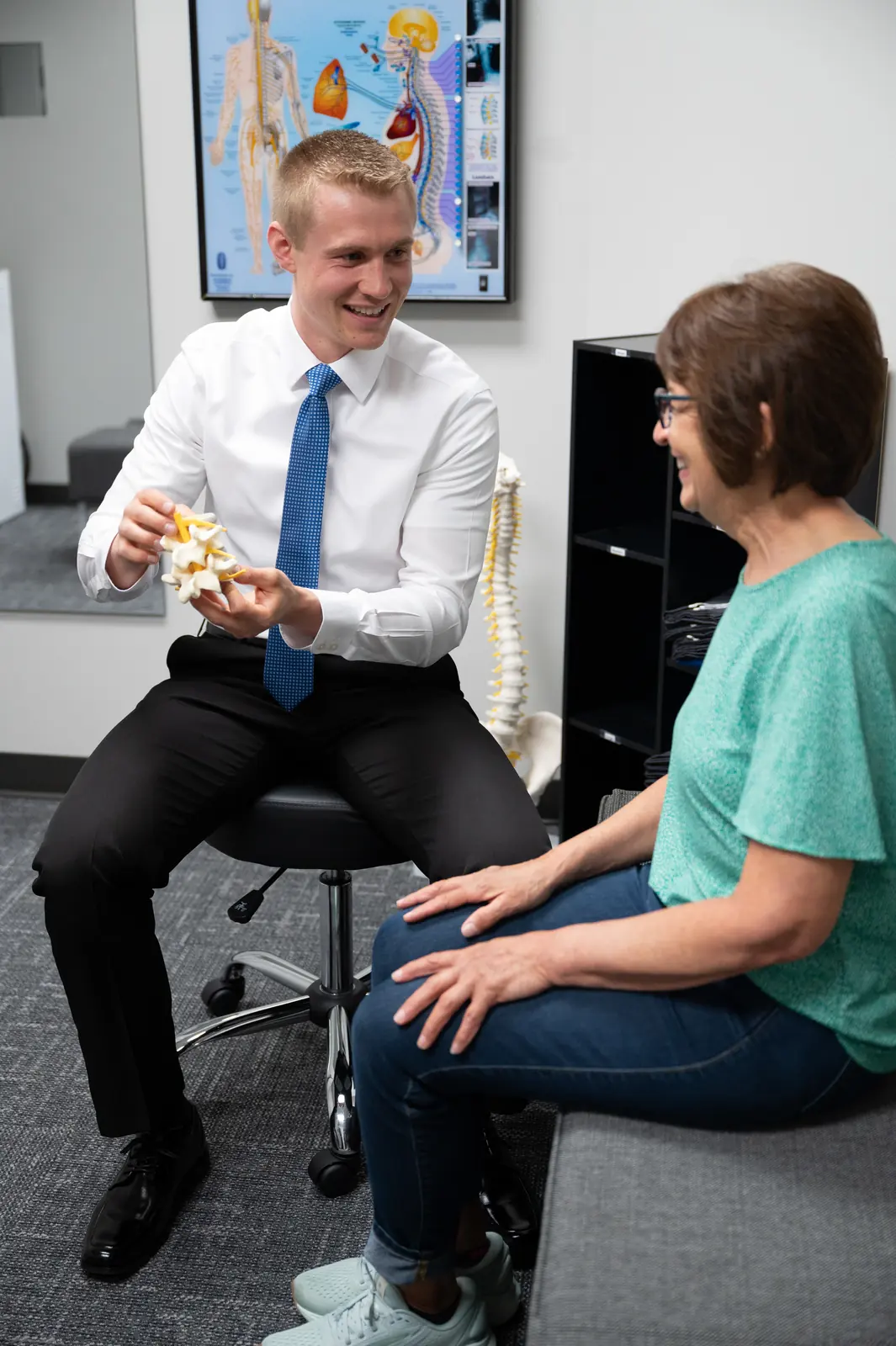
When one shoulder stops moving well, people often compensate by hiking the shoulder, leaning or rounding the upper back. That can lead to neck pain, upper-back tightness and headaches. At our office, Dr. Hunter may help with:
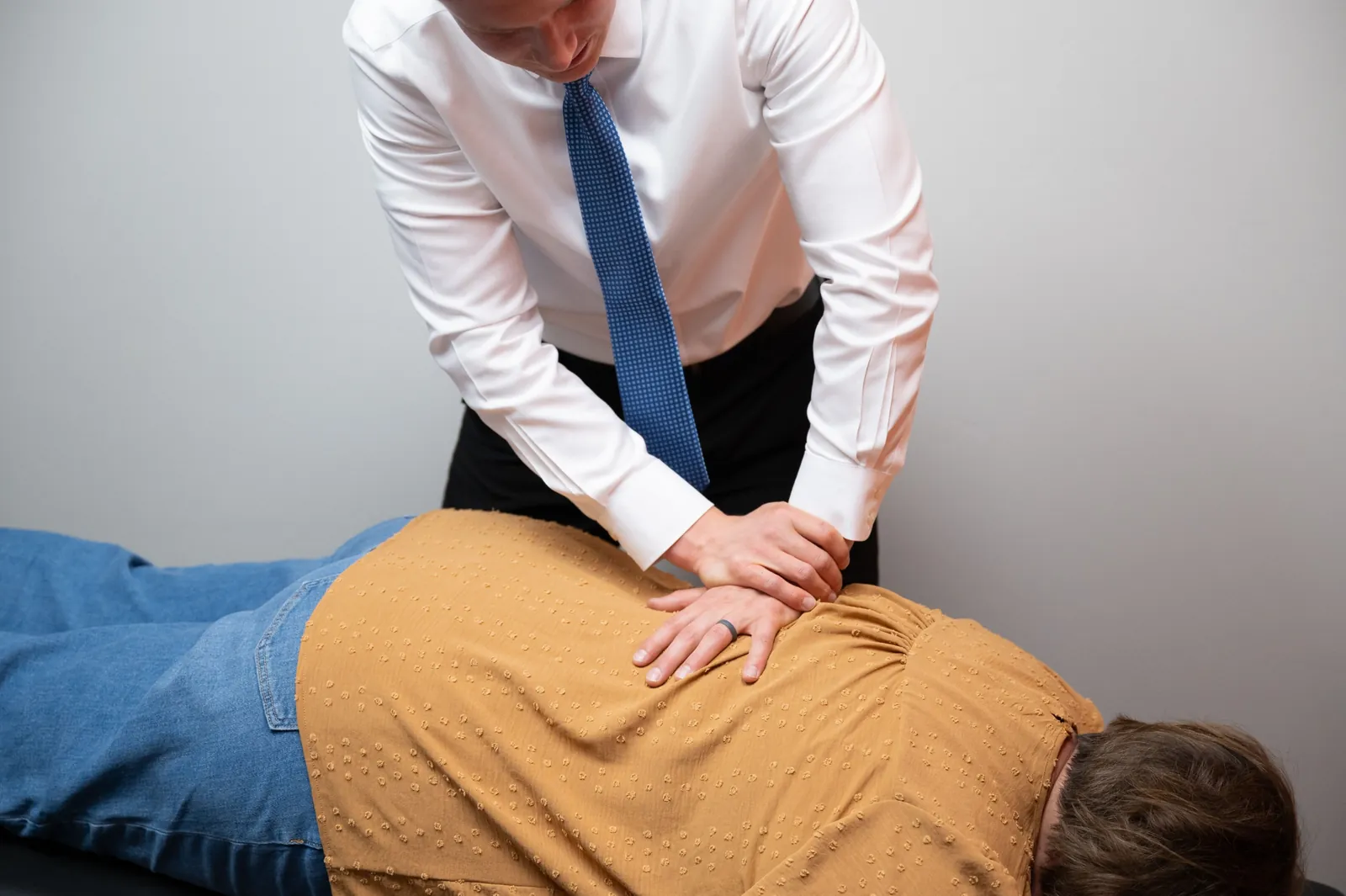
- Gentle chiropractic adjustments to the neck and upper back to ease stiffness and strain from compensation
- Gentle shoulder mobility work within your comfort, never forced
- Posture, sleep and workstation advice to reduce strain while the shoulder recovers
- Home exercises that fit with, not replace, your physical therapy program
We are happy to coordinate with your medical team. If you have not been diagnosed yet, we can examine your shoulder and refer you to a physician when frozen shoulder or another condition seems likely. Learn more about shoulder pain care in Green Bay.
At-Home Strategies That May Help
- Do gentle stretches each day as directed, such as pendulum swings, towel stretches and cross-body reaches, staying within a tolerable range.
- Try warmth before stretching to help the shoulder loosen up.
- Use a cold pack afterward if the shoulder feels sore.
- Keep using the arm for light daily tasks instead of resting it completely.
- Set up your workstation so you are not constantly reaching or hunching.
Can Frozen Shoulder Be Prevented?
Not always. The most practical step is avoiding long periods of keeping the shoulder still. If you are recovering from an injury or surgery, ask your doctor when it is safe to start moving the arm. If your shoulder starts stiffening without a clear reason, get it checked early. New patients can start with our $18 new patient special.
Frequently Asked Questions
No single treatment unlocks a frozen shoulder quickly. The condition involves a thickened joint capsule and is usually managed by physicians and physical therapists. Chiropractic care can play a supportive role by easing neck and upper-back strain from compensation, offering gentle mobility work and helping with posture and home exercises alongside your medical care.
It varies, but frozen shoulder commonly lasts a year or longer as it moves through the freezing, frozen and thawing stages. Many people regain much of their motion over time. Staying consistent with the stretches your physical therapist recommends and keeping the arm gently active can help you keep as much movement as possible along the way.
Researchers are still studying the reasons. One theory is that higher blood sugar over time affects the connective tissue in the joint capsule. People with diabetes are more likely to develop frozen shoulder and may have a slower recovery. If you have diabetes and notice new shoulder stiffness, let your doctor know so it can be evaluated.
Related Care in Green Bay
- Chiropractic CareHands-on adjustments based on a thorough exam and, when needed, X-rays.
- Wellness CareOngoing visits to help you stay mobile once you feel better.
- Shoulder PainShoulder stiffness, pain and limited reach.
- Rotator CuffShoulder strain and rotator cuff irritation.
- ArthritisStaying mobile with osteoarthritis-related stiffness.
Sources