Even a low-speed crash can leave you sore, stiff and a little off for days. Adrenaline often hides pain at the scene, so it is common to feel fine in the parking lot and wake up the next morning unable to turn your head.
If you are wondering what chiropractic care after a car accident actually involves, this guide walks through the treatments Dr. Hunter Schultz uses at our Green Bay office, how a plan usually progresses and how chiropractic care fits alongside your physician and your insurance.
Injuries We Commonly See After a Crash
Car accidents put sudden force through the spine and the soft tissues that support it. The most common problems include:
- Whiplash and neck strain. The head snaps forward and back, straining muscles, ligaments and the small joints of the neck. Our whiplash care page covers this in detail.
- Mid- and low-back pain. Seat belts and the twist of impact can strain the upper back, lower back and pelvis.
- Muscle and ligament sprains. Shoulders, chest wall and upper back muscles often tighten and spasm after a collision.
- Restricted joints. Spinal joints that stop moving well can leave you stiff and achy, and sometimes irritate nearby nerves, causing pain, tingling or numbness into an arm or leg.
- Headaches. Many post-crash headaches start in tight neck and upper back muscles. A head injury or concussion, though, needs a medical evaluation, and we screen for it and refer when we see warning signs.
Common Chiropractic Treatments Used After a Collision
No two crash injuries are the same, so treatment is chosen after a thorough exam. These are the tools you are most likely to encounter at our office.
A careful exam and imaging when needed
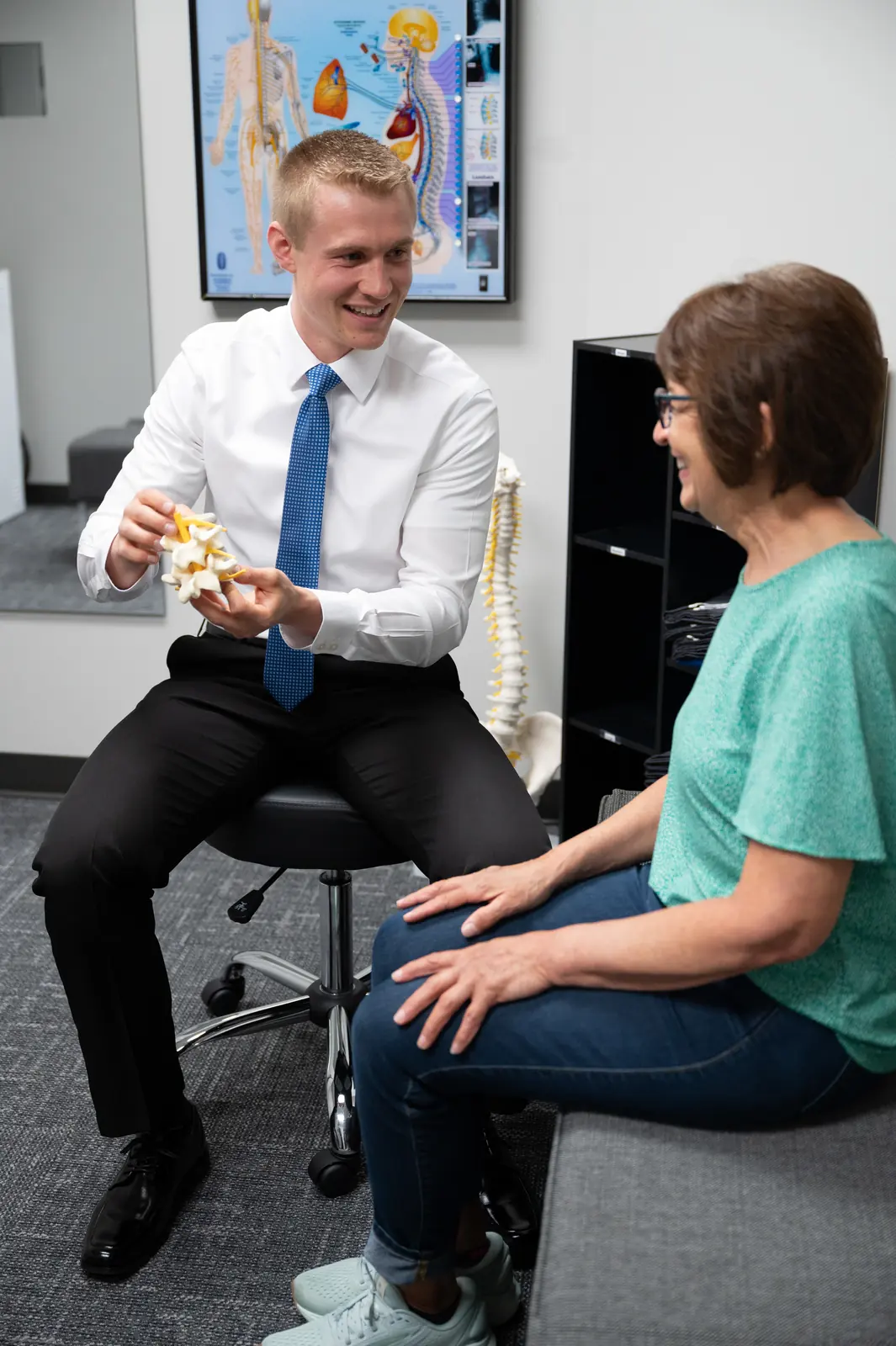
Your first visit includes a detailed history of the crash, a hands-on exam and checks of reflexes, strength and sensation. If your history or exam calls for it, on-site spinal X-rays help rule out fracture and show the structure of your spine. When an MRI or a medical opinion is the better next step, we refer you.
Specific spinal adjustments
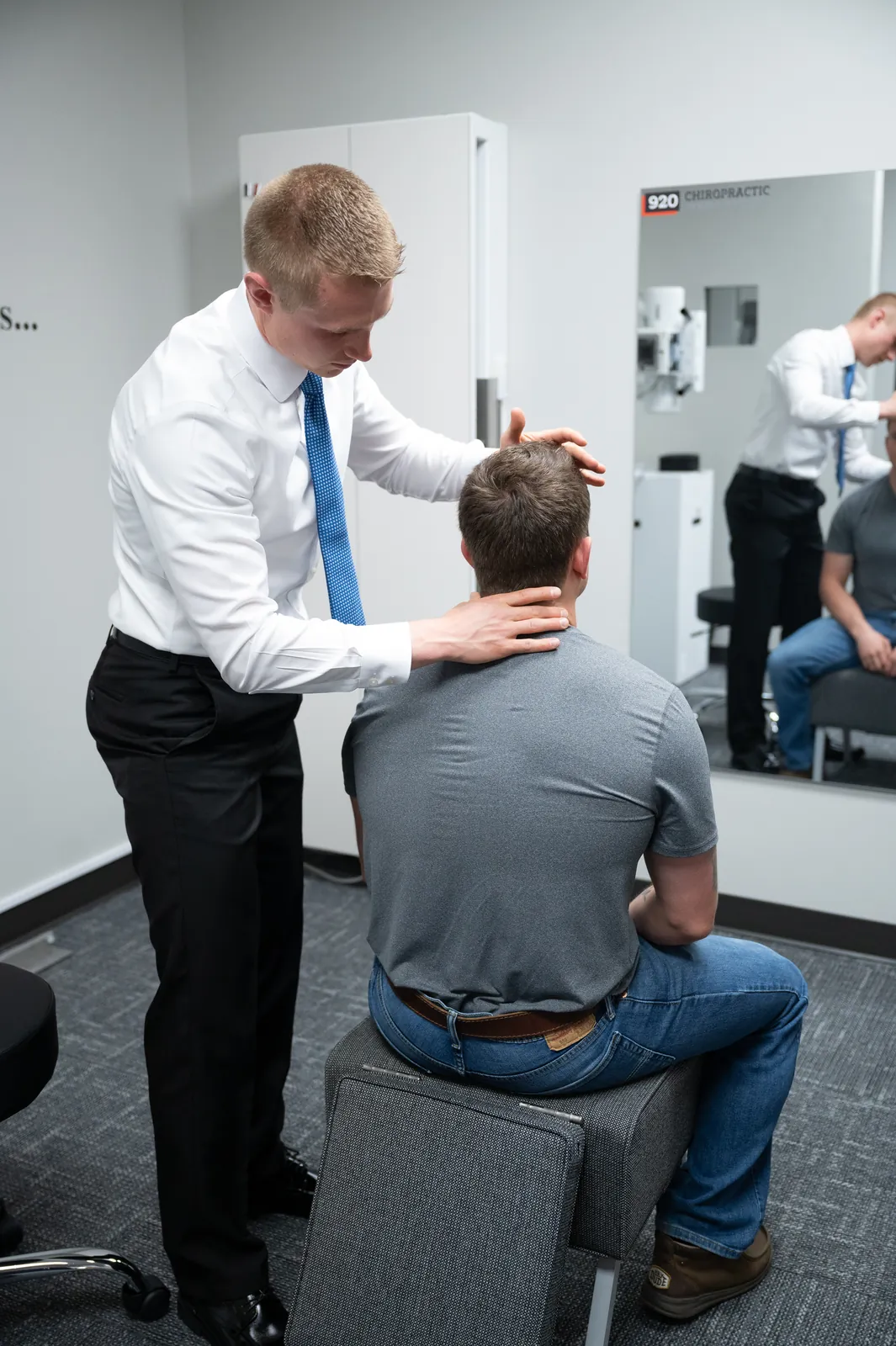
An adjustment is a controlled, targeted movement applied to a spinal joint that is not moving well. Dr. Hunter uses a Gonstead-based approach to find and adjust specific segments. For people who are very sore early on, or who prefer a lighter touch, care starts gently, and intersegmental traction is a low-force option.
Intersegmental traction
This table-based therapy gently moves the spine through a comfortable range, one segment at a time. Many patients find it relaxing, and it can help stiff joints get moving again between adjustments.
Spinal decompression
For some low-back and disc-related injuries, non-surgical spinal decompression may be part of the plan. It uses controlled, gentle stretching of the spine and is not right for everyone; Dr. Hunter will explain whether it fits your case.
Home exercises and self-care
Short, simple stretches and strengthening exercises keep progress going between visits. You will also get practical advice on ice and heat, sleep position, driving and returning to work.
How a Car Accident Care Plan Usually Progresses
Recovery is rarely a straight line, but care tends to move through three broad phases:
- Calm things down. Gentle care, light movement and cold packs to ease pain and protect injured tissue.
- Restore motion. More specific adjustments, traction and range-of-motion work as tolerance improves.
- Build resilience. Strengthening, posture and workstation habits to support a full return to daily life.
Mild soreness after early treatments is common and usually fades within a day or two. We reassess regularly and change the plan as you improve. Chiropractic care can run alongside care from your primary care physician, physical therapist or other providers, and we are glad to coordinate.
Self-Care Tips for the First Few Weeks
- Stay gently active. Short walks and easy stretches usually help more than bed rest.
- Use cold early and gentle heat later, about 15 minutes at a time with a cloth against your skin.
- Choose a pillow that keeps your head level with your spine, and avoid sleeping on your stomach while you recover.
- Avoid heavy lifting and activities that clearly make your pain worse.
- Write down your symptoms as they appear. It helps your exam and any claim.
How Payment Works After a Wisconsin Crash
Wisconsin is an at-fault (tort) state. Drivers are not required to carry personal injury protection, so there is no automatic coverage that pays medical bills regardless of who caused the crash. After a collision, care is usually paid through one or more of these:
- The at-fault driver’s liability insurance
- Your own medical payments coverage, if your policy includes it
- Your health insurance
Every policy and claim is different, so we cannot promise what will be covered. Check with your insurer, and talk to an attorney if you have legal questions. Our auto accident care in Green Bay page explains what to bring to your first visit.
Myths About Chiropractic Care After a Crash
“I am not in much pain, so I do not need to be checked.” Symptoms often show up hours or days later. An early exam gives you a baseline and catches problems sooner.
“Adjustments are too rough for a fresh injury.” Early care is gentle, and low-force options are available. Treatment is matched to how you are feeling that day.
“Care after a crash is just paperwork for a claim.” The goal is helping you feel and move better. Clear records are simply part of good care.
Get Checked After Your Accident
If you have been in a crash and something does not feel right, book an evaluation within the first few days once emergency concerns are ruled out. New patients can start with our $18 new patient special.
Frequently Asked Questions
Ideally within the first few days, even if your symptoms seem minor, and always after any emergency concerns are ruled out. Pain and stiffness often build over the first 24 to 72 hours. An early exam documents your injuries, screens for warning signs and lets you start gentle, guided care sooner rather than waiting to see if things settle.
It depends on your situation. Wisconsin is an at-fault state with no required personal injury protection. Care is usually paid through the at-fault driver’s liability insurance, your own medical payments coverage if you carry it, or your health insurance. We cannot promise coverage, so check with your insurer and talk to an attorney about legal questions.
It varies with how hard the impact was, which areas were injured, how long you waited before starting care and how your body responds. Some people improve within a few weeks; others need longer. Dr. Hunter reassesses you regularly, explains what he is seeing and adjusts the plan to your progress instead of a fixed number of visits.
Bring a photo ID, your auto and health insurance information, the claim number if you have one, a copy of the accident report and any emergency room or urgent care records. A short written timeline of the crash and the symptoms you have noticed since then also helps make your first exam thorough and efficient.
Related Care in Green Bay
- Auto Injury CareEvaluation and care for neck and back injuries after a crash.
- Intersegmental TractionA relaxing roller table that gently mobilizes each spinal segment.
- Spinal DecompressionGentle, controlled traction for disc-related back and neck pain.
- WhiplashNeck injury from a sudden jolt, often in a crash.
- Back PainLow and mid-back pain, stiffness and spasms.
- Neck PainStiff, sore necks from posture, strain or injury.
Sources