Look around any break room, waiting room or school bus and you will see the same posture: head tipped forward, shoulders rounded, eyes on a screen. Hours in that position add up. Many people now notice a stiff, achy neck and a tight upper back by the end of the day, a pattern often called tech neck.
In this article, Dr. Hunter Schultz explains what tech neck is, why it happens, how chiropractic adjustments can fit into a plan to ease it and the everyday habits that matter just as much as anything done on the table.
What Is Tech Neck?
Tech neck, also called text neck, describes neck and upper back strain linked to long stretches of looking down at phones, tablets and laptops. It is not a formal diagnosis. It is a handy name for a common mechanical problem: the muscles, joints and ligaments of the neck working harder, and for longer, than they were built to.
Your head is heavy. When it sits balanced over your shoulders, the neck holds it with little effort. As the head drifts forward and down, the muscles at the back of the neck and between the shoulder blades have to work harder to keep it up. Over weeks and months, that extra load can leave muscles tight and tired, joints stiff and chest muscles shortened, which pulls the shoulders further forward.
Common Tech Neck Symptoms
Symptoms range from a mild ache to pain that makes it hard to focus at work or school. Watch for:
- Neck pain and stiffness, often worse late in the day
- Tension headaches that start at the base of the skull
- Tight, achy shoulders and upper back
- Less ability to turn or tilt your head
- Eye strain and a general sense of screen fatigue
- Tingling or numbness in the arms or hands
That last one deserves attention. Tingling, numbness or weakness in an arm can mean a nerve is irritated in the neck, and it should be examined rather than stretched away. Our page on neck pain treatment in Green Bay explains how we evaluate those symptoms.
What Causes Tech Neck?
Screens are not the enemy. The problem is how we use them and for how long. The usual contributors are:
- Forward head posture. Craning toward a phone in your lap or a laptop on the couch is the biggest factor.
- Long sessions without breaks. Almost any posture becomes a strain when you hold it for an hour without moving.
- A poor workstation. A monitor set too low, a chair at the wrong height or a keyboard that is too far away pulls the body out of a neutral position.
- Low activity overall. A sedentary routine leaves the muscles that support the neck and upper back less able to handle a sustained load.
- Stress. Many people carry tension in their shoulders and jaw, which can add to neck tightness.
How Chiropractic Care Can Help With Tech Neck
Chiropractic care looks at how the joints of your spine move and how the surrounding muscles respond. With tech neck, it is common to find stiff segments in the lower neck and upper back, guarded muscles and a posture that has adapted to hours of looking down.
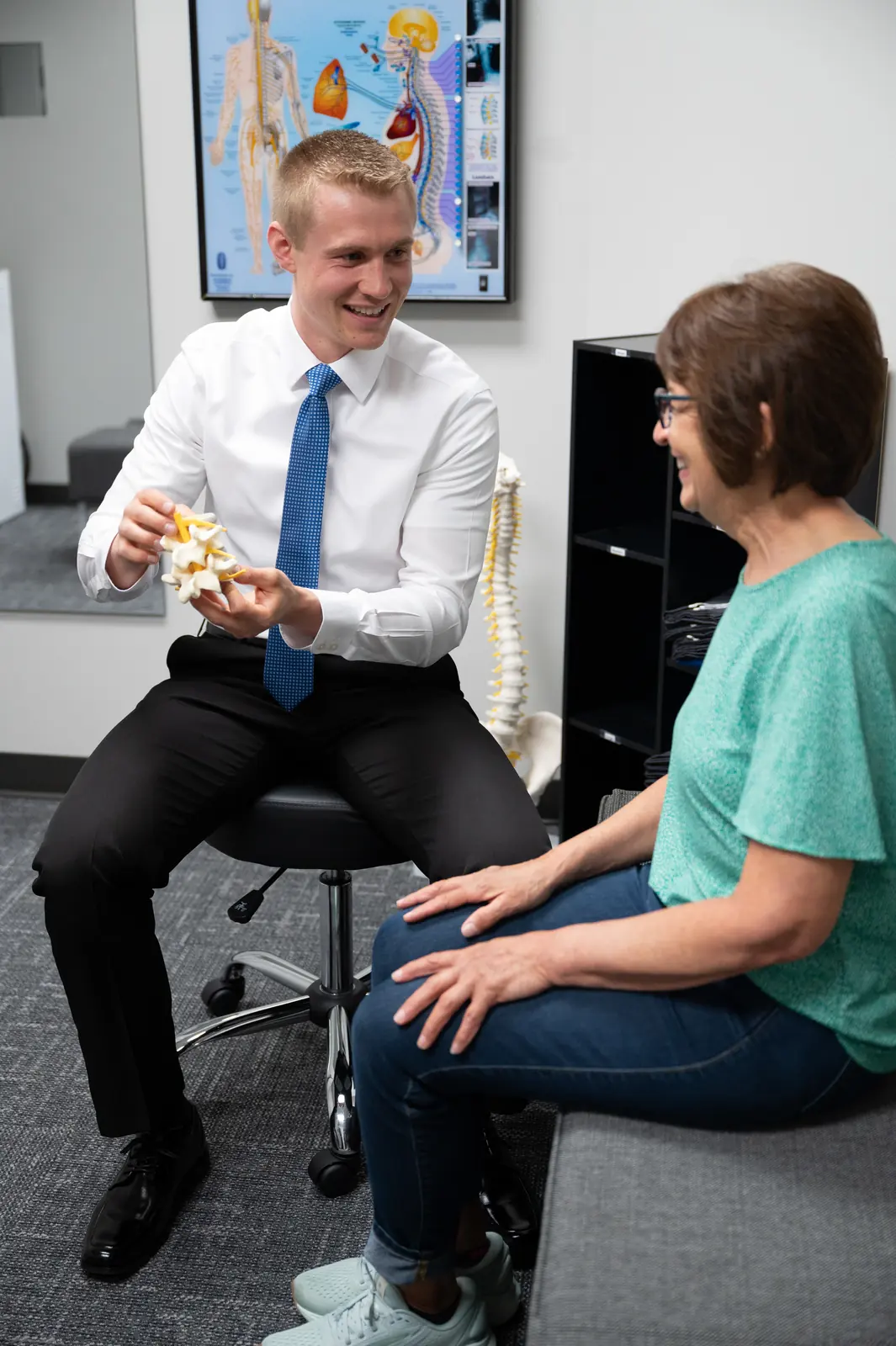
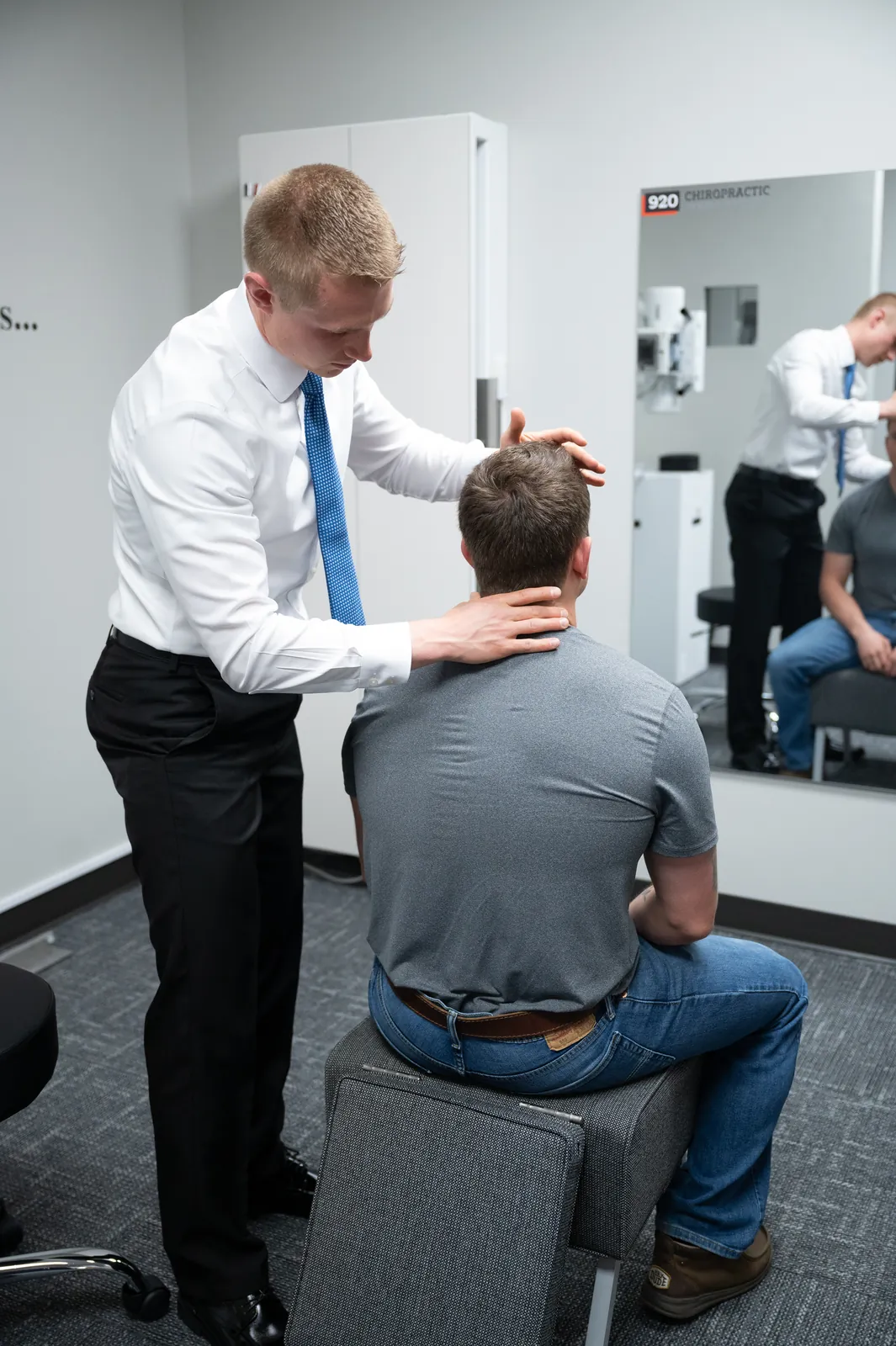
At our office, care starts with a conversation about your work, your screen habits and your symptoms, followed by a hands-on exam of posture, joint motion, muscle tone, reflexes, strength and sensation. If your history or exam calls for imaging, on-site spinal X-rays are available. From there, Dr. Hunter builds a plan that may include:
- Specific adjustments to restore motion in stiff segments of the neck and upper back, using a Gonstead-based approach, comfortable motion through the spine
- Exercises and stretches to strengthen the deep neck muscles and the muscles between the shoulder blades
- Workstation and habit coaching so the strain does not rebuild between visits
According to the National Center for Complementary and Integrative Health, spinal manipulation has been studied for neck pain and is generally safe when performed by a trained, licensed practitioner. Many patients find that adjustments ease stiffness and make it easier to move, though results vary from person to person. You can read more about how we approach posture-related pain.
What Adjustments Can and Cannot Do
An honest picture helps you set the right expectations:
- Adjustments may help relieve pain and improve range of motion in stiff joints.
- They can make a better posture easier to hold, but they do not change posture on their own. Strength, breaks and setup changes do that work over time.
- They are a drug-free option that can be used alongside any medication your physician recommends.
- Periodic check-ins help some people stay ahead of flare-ups, but tech neck can return if old habits do.
Everyday Habits That Help Prevent Tech Neck
- Bring the screen up. Hold your phone closer to eye level and raise your monitor so the top of the screen sits at or slightly below eye height.
- Set up your chair. Keep your feet flat, your hips about level with your knees and your lower back supported.
- Keep the keyboard close. Elbows near your sides and bent around 90 degrees.
- Move every 30 minutes. Stand, roll your shoulders and look away from the screen for a minute.
- Try gentle stretches. Chin tucks, slow head turns and side bends within a comfortable range. Stop any stretch that sends pain or tingling into your arm.
- Stay active. Walking, swimming and strength training all support the muscles that hold your head up.
- Notice your stress. A few slow breaths with relaxed shoulders between tasks can ease built-up tension.
Kids and teens are not immune. If your child spends hours gaming or on a tablet, the same screen-height and break rules apply.
When to Get Your Neck Checked
Book an evaluation if neck pain or headaches last more than a week or two despite better habits, keep coming back, or come with tingling or numbness in your arms. Frequent headaches linked to neck tension are covered on our headache care page.
If you live or work in Green Bay, new patients can start with our $18 new patient special. We will tell you plainly whether chiropractic care is a good fit or whether you should see your physician first.
Frequently Asked Questions
Tech neck is not a formal diagnosis, but the symptoms are real. It describes neck and upper back strain linked to long periods of looking down at screens. The muscles, joints and ligaments of the neck take on extra load in that position, which can lead to stiffness, aching and tension headaches. An exam helps rule out other causes of neck pain.
It depends on how long you have had symptoms, how stiff your neck and upper back are and how much your daily habits change. Some people feel easier after a few visits, while others need several weeks of care. Dr. Hunter reassesses you regularly and adjusts the plan based on your progress rather than a set number of visits.
A chin tuck is a simple place to start. Sit tall, look straight ahead and gently draw your chin straight back, as if making a double chin. Hold for a few seconds, relax and repeat several times. It should feel like a mild stretch at the base of your skull. Stop if it causes pain or tingling into your arm.
Yes. Young people who spend long periods on phones, tablets or gaming consoles can develop the same neck and shoulder strain as adults. Raising screens, encouraging breaks and keeping kids active are good first steps. If your child has ongoing neck pain, headaches or numbness, have them evaluated, and involve your pediatrician if symptoms are unusual.
Related Care in Green Bay
- Chiropractic CareHands-on adjustments based on a thorough exam and, when needed, X-rays.
- Wellness CareOngoing visits to help you stay mobile once you feel better.
- Neck PainStiff, sore necks from posture, strain or injury.
- Poor PostureTech neck, rounded shoulders and desk posture.
- HeadachesTension-type and neck-related headaches.
Sources