
Disc Injuries in Athletes: Chiropractic Prevention and Recovery in Green Bay
Disc injuries can sideline even the most dedicated athletes. As a chiropractor serving Green Bay, I see how quickly back or neck pain can steal momentum, confidence, and joy from training. The good news: with the right plan, most disc problems improve. At 920 Chiropractic Health & Injury Care, we help athletes protect their spines, recover safely, and return to sport with a smarter, stronger foundation.
In this article, you’ll learn what disc injuries are, why they happen in sports, the signs to watch for, and the strategies we use in our clinic to prevent and recover from them. You’ll also find simple, practical tips you can start today to support your spine—on the field, on the ice, or on the trail here in Green Bay.
What is a disc injury? A disc injury involves irritation, tearing, or herniation of the soft, shock-absorbing disc between the vertebrae. It can cause localized pain or radiating symptoms when nearby nerves are affected. Early, skilled chiropractic care helps restore motion, reduce irritation, and guide a safe return to sport.
Table of Contents
- What Are Disc Injuries in Athletes?
- Why Disc Health Matters for Athletic Performance
- Common Causes and Risk Factors in Sports
- Signs and Symptoms to Watch For
- The Biomechanics: How Discs Get Irritated or Herniated
- How Chiropractic Care Helps Athletes with Disc Injuries
- Prevention Strategies You Can Start Today
- A Safe Recovery Roadmap at 920 Chiropractic
- When to See a Chiropractor in Green Bay
- When to Seek Medical Evaluation Urgently
- Myths vs Facts About Disc Injuries and Chiropractic
- Final Thoughts for Green Bay Athletes
- FAQs
- TL;DR
What Are Disc Injuries in Athletes?
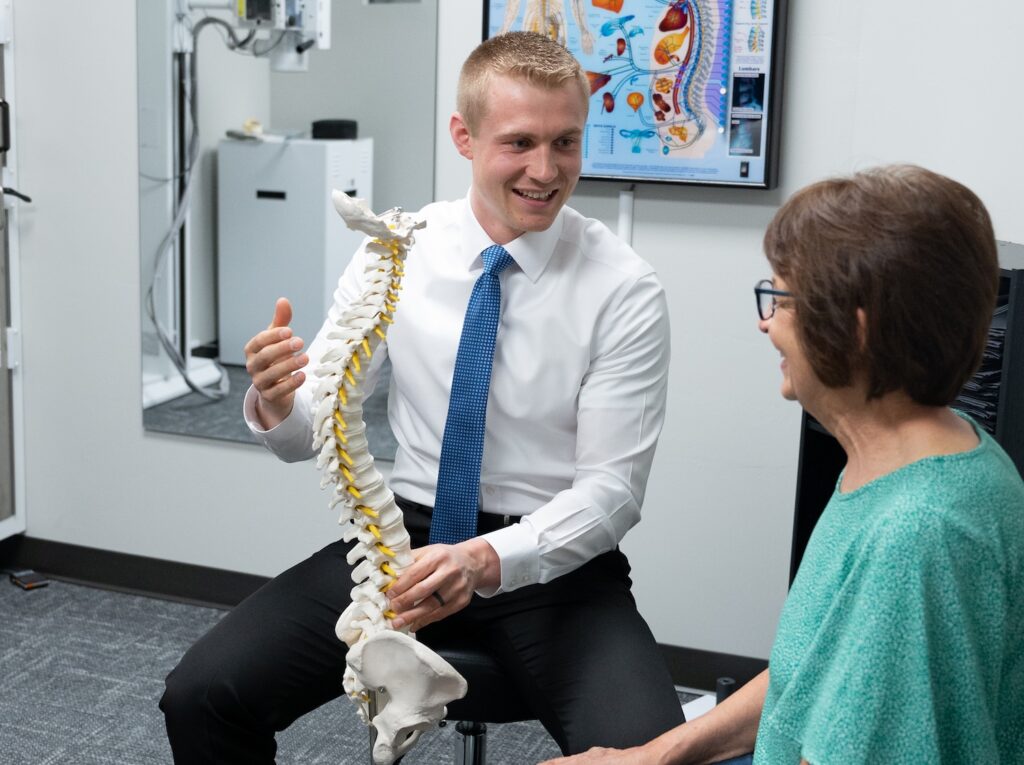
Your spine’s discs act like cushions between the vertebrae. Each disc has a soft center (nucleus) and a tougher outer layer (annulus). Repetitive strain, heavy loading, or awkward movement can irritate the disc, create small tears, or push disc material outward (a herniation). When a disc swells or herniates, it can inflame nearby joints or irritate a nerve, leading to back or neck pain, stiffness, and sometimes arm or leg symptoms.
Athletes often notice issues during deadlifts, sprints, tackles, rotational swings, overhead movements, or after a fall. Chiropractic care focuses on restoring joint motion, improving alignment and body mechanics, calming irritated tissues, and guiding a graded return to training.
Why Disc Health Matters for Athletic Performance
Healthy discs absorb force and share load between segments of the spine. When a disc is stressed, the spine can stiffen to protect itself. That stiffness changes timing and power transfer through the hips, core, and shoulders. The result is lost speed, poor rotation, or compensation that sets up new injuries.
Keeping discs healthy helps you hinge cleanly, rotate efficiently, and maintain endurance deep into a game or race. For athletes in Green Bay—whether you play football, hockey, golf, or you love CrossFit or distance running—disc health is a key part of consistent performance.
Common Causes and Risk Factors in Sports
Disc injuries rarely come from one bad move. They usually build over time from accumulated stress. Common contributors include heavy lifting with a rounded low back, high-volume flexion or rotation, rapid deceleration, and hits or awkward landings. Long practices without recovery, poor sleep, and deconditioning increase risk.
Technique matters, but so does variability. Repeating the same motion day after day with limited cross-training can fatigue the stabilizers that protect the spine. The combination of fatigue and poor mechanics is what most often sets the stage for disc problems.
Signs and Symptoms to Watch For
Disc-related pain can feel sharp with certain movements and dull or achy at rest. Many athletes report pain bending forward, sitting, or transitioning from sitting to standing. Coughing or sneezing may increase pressure and irritation.
When a nerve is involved, symptoms may travel into a leg or arm. You may notice tingling, numbness, or weakness, especially with prolonged sitting or repeated bending. Not everyone has radiating pain, though—some only feel stiff, guarded, and “off” during sport.
The Biomechanics: How Discs Get Irritated or Herniated
Discs tolerate load well when the spine moves through a healthy, supported range. The problem arises when repeated flexion, rotation, or compression happens without adequate control. Micro-stress accumulates in the outer fibers of the disc. Over time, that can create small fissures. In some cases, the inner material pushes outward through these weakened areas, creating a bulge or herniation.
Spinal joints above and below a stiff segment often overwork to compensate. Muscles brace to protect irritated tissue, which can feel like knots or tight bands. Chiropractic assessment identifies which segments are restricted, how you move under load, and what adjustments or movement cues restore balance.
How Chiropractic Care Helps Athletes with Disc Injuries
Chiropractic care is a frontline, conservative approach for spine-related pain. For disc problems, our goals are to reduce irritation, restore joint mobility, and retrain movement so you can load the spine safely again. Many athletes improve with a combination of targeted spinal adjustments and sport-specific coaching.
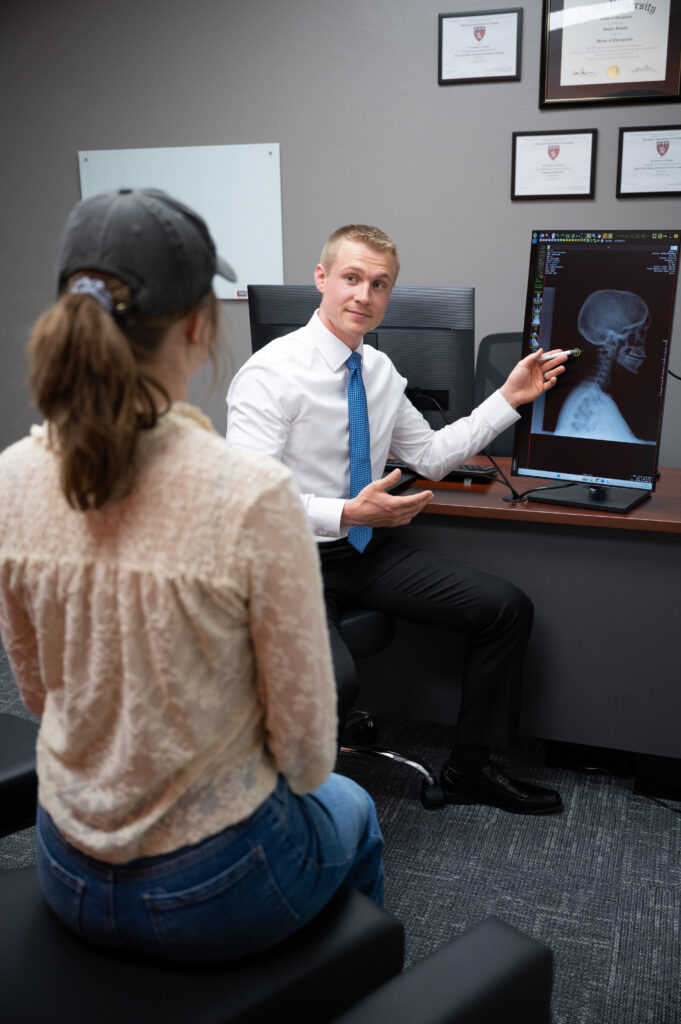
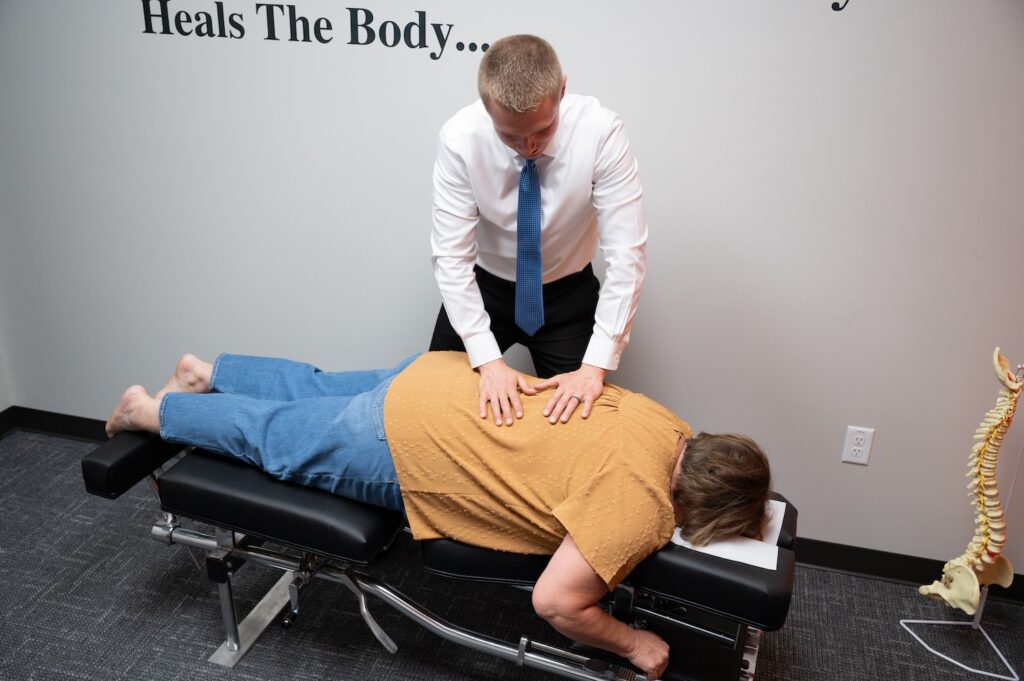
Here at 920 Chiropractic Health & Injury Care, we tailor care to your presentation. That may include precise spinal adjustments to restore motion in restricted segments, spinal decompression therapy to gently reduce pressure on irritated discs, and home exercises to strengthen muscles. We also coach you on positions that calm symptoms and positions to avoid during early recovery.
Evidence-based guidelines support non-drug, conservative care for spine pain, including spinal manipulation as an initial option for many patients. Research summarized by the American College of Physicians and the National Center for Complementary and Integrative Health indicates that spinal manipulation can help improve pain and function for low back conditions as part of a conservative plan. You can explore summaries here: ACP Guideline and NCCIH overview.
Chiropractic care is not only about pain relief. It’s also about restoring how you move. We help you build a spine-sparing hinge, dial in bracing strategies, and regain rotational control. That’s how you return to sport with confidence and reduce the chance of flare-ups.
Prevention Strategies You Can Start Today
Most disc injuries are preventable with smart training habits. Small changes add up. Here are strategies we teach Green Bay athletes to protect their spines through the season and beyond:
- Respect the hinge: keep your chest proud, hips back, and spine long when lifting or picking up gear.
- Stack and brace: before a rep, exhale gently, then create a light 360-degree brace through the trunk without breath-holding.
- Rotate from the hips and mid-back: avoid twisting through a flexed low back, especially under load.
- Vary your volume: cycle heavy days with technical or lighter days; avoid pushing to fatigue on form-heavy lifts.
- Warm up with purpose: 5–10 minutes of dynamic movement and patterning beats static stretching alone.
- Build endurance in stabilizers: tempo carries, anti-rotation holds, and controlled hinge patterns support the spine.
- Mind your recovery: quality sleep and hydration help discs rehydrate and tissues repair.
- Listen early: if a motion repeatedly triggers pain, get it evaluated before it becomes a pattern.
A Safe Recovery Roadmap at 920 Chiropractic
Recovery is not about stopping everything. It’s about doing the right things in the right order. We customize each plan, but most disc recoveries follow a logical progression:
- Phase 1: Calm the irritation. We identify positions of relief and movements that reduce pressure on the disc. Spinal adjustments target restricted segments to improve motion and decrease protective spasm. We coach you on sleep positions and safe transitions, like rolling to your side before sitting up.
- Phase 2: Restore controlled movement. As pain eases, we reintroduce hinge, squat, and lunge patterns with careful load management. Gentle core endurance work reinforces a stable, mobile spine. Spinal decompression therapy or other low-force techniques may continue if helpful.
- Phase 3: Rebuild capacity. We progress load, speed, and complexity as tolerated. Rotational control for golfers and hockey players, landing mechanics for field and court athletes, and lift technique for strength athletes are refined here. Many athletes note that they return to sport with better mechanics than before the injury.
- Phase 4: Performance protection. Maintenance visits timed to your training cycles help keep motion segments moving well, catch early stiffness, and reinforce good habits. Think of this as proactive spinal care, similar to how you care for your equipment and nutrition.
When to See a Chiropractor in Green Bay
If back or neck pain limits your training, lingers beyond a few days, or repeatedly returns with certain lifts or plays, it’s time to get evaluated. The earlier we identify and correct the mechanical cause, the faster you can recover. Waiting often leads to more guarding, stiffer joints, and a longer road back.
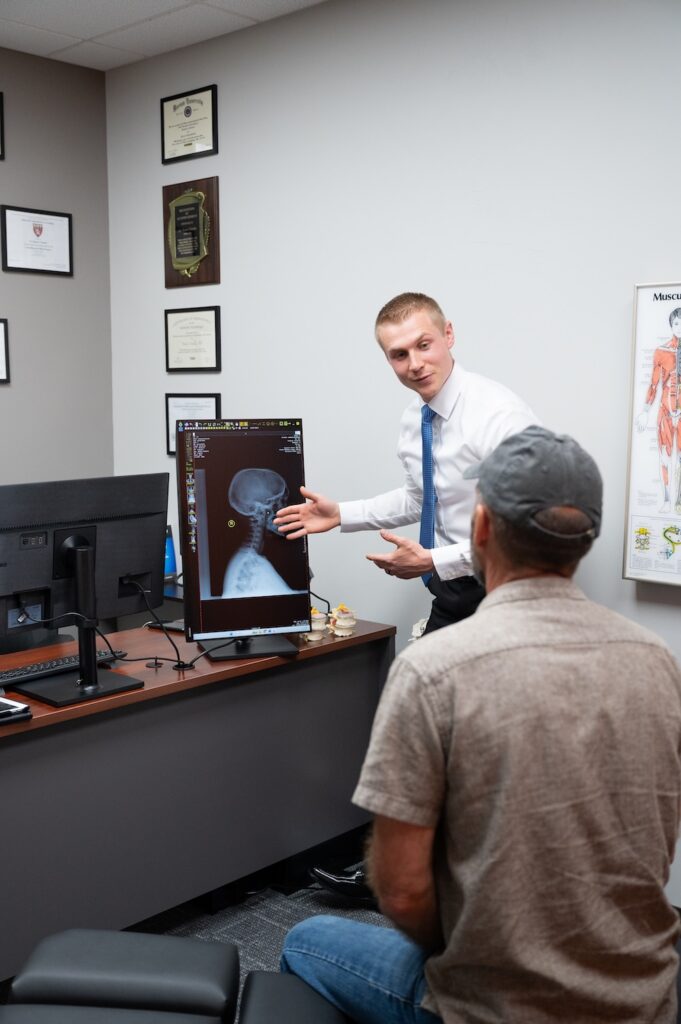
You don’t need a referral to consult with a chiropractor at 920 Chiropractic Health & Injury Care. We assess your spine, nerves, and movement patterns, then outline a clear plan. If imaging or co-management is appropriate, we will discuss that openly. Our focus is effective, conservative spine care that helps you get back to the activities you love in Green Bay.
When to Seek Medical Evaluation Urgently
While most disc injuries respond well to conservative chiropractic care, certain symptoms require immediate medical attention. Seek urgent care if you notice new or worsening loss of bowel or bladder control, severe numbness in the saddle region, or rapidly progressing leg or arm weakness. Also seek prompt evaluation after significant trauma, or if you have unexplained fever with spine pain.
If any red flags are present during your visit, we will refer you to the appropriate medical provider right away. Your safety always comes first.
Myths vs Facts About Disc Injuries and Chiropractic
| Myth | Fact |
|---|---|
| “If a disc is herniated, only surgery can fix it.” | Many disc herniations improve with time and skilled conservative care. The body often reabsorbs disc material, and symptoms can resolve with the right plan. |
| “If it hurts to bend, rest completely until it’s gone.” | Short-term activity modification helps, but guided movement is key. Safe, progressive loading supports healing and prevents deconditioning. |
| “Chiropractic is just for back ‘cracking.’” | Modern chiropractic is comprehensive spine care: assessment, precise adjustments, and spinal decompression therapy. |
| “Once you have a disc injury, you’ll never compete the same.” | With a structured plan, many athletes return to full performance and often move better than they did before. |
Final Thoughts for Green Bay Athletes
Disc injuries are common, but they don’t have to define your season. With early evaluation, targeted chiropractic care, and smart training progressions, most athletes recover and return to what they love. If you’re in Green Bay and suspect a disc issue, we’re here to help you understand your spine, calm the irritation, and build back stronger.
Have questions about your symptoms or your lifting form? Reach out to 920 Chiropractic Health & Injury Care. We take the time to listen, examine, and create a clear, step-by-step plan that fits your sport and schedule.
FAQs
What does a disc herniation feel like?
It varies. Some feel sharp low back or neck pain with bending or sitting. Others feel numbness, tingling, or weakness into a leg or arm if a nerve is irritated. A proper exam is the best way to know.
Can I keep training with a disc injury?
Often yes, with modifications. We remove provocative movements, then reintroduce safe, supported patterns. Training continues, but smarter and more targeted to healing.
How long does recovery take?
Timelines differ by severity, sport demands, and individual healing. Many athletes notice improvements within weeks with consistent chiropractic care and home strategies.
Do I need an MRI?
Not always. Many disc-related issues can be diagnosed clinically. Imaging is considered if red flags are present or if symptoms don’t respond as expected.
Are spinal adjustments safe for disc problems?
When performed by a licensed chiropractor after a proper exam, adjustments are considered safe for many patients. Techniques are selected and modified based on your presentation.
Will a brace help?
Short-term support may be useful in some cases, but relying on a brace long-term can weaken stabilizers. We prioritize building your own support through movement and control.
TL;DR
- Disc injuries in athletes usually result from repeated stress, poor mechanics, and fatigue—not just one bad move.
- Frontline chiropractic care helps calm irritation, restore motion, and retrain movement for a safe return to sport.
- Prevention hinges on good lifting patterns, rotation control, varied training, and recovery basics like sleep and hydration.
- See a chiropractor if pain limits your training or lingers; seek urgent care for red flags like bowel/bladder changes or severe weakness.
- Most athletes recover well with a structured plan, often returning stronger and more efficient.