
Share this episode:
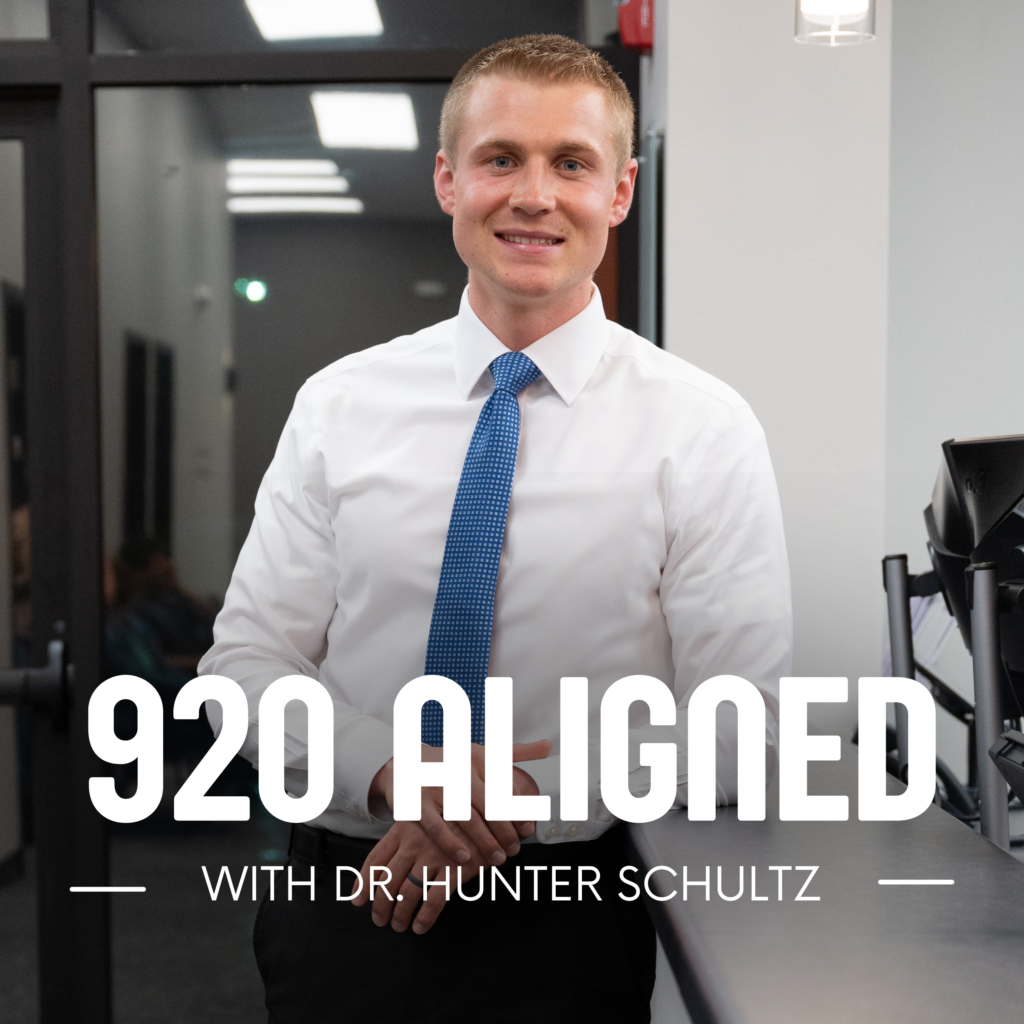
In this episode, Dr. Hunter Schultz of 920 Chiropractic Health & Injury Care in Green Bay explores the often-overlooked relationship between stress and physical pain. Many patients come in for back or neck pain without realizing that chronic stress can manifest as very real, very physical symptoms throughout the body. Dr. Schultz breaks down the science behind the brain-body connection in a way that’s easy to understand and immediately relevant to your health. Whether you’re dealing with tension, soreness, or recurring pain, this episode will change the way you think about what’s driving your discomfort. Tune in to learn how addressing stress may be just as important as any physical treatment in your recovery.
Hey everyone, welcome back. I’m Doctor Hunter Schultz with nine-two-oh Chiropractic Health and Injury Care here in Green Bay, and today we’re talking about something that I think a lot of people don’t fully connect — and that’s the relationship between stress and physical pain.
Now, you might be thinking, “Doctor Schultz, I came in for my back, not to talk about my feelings.” And I get that. I really do. But here’s the thing — your brain and your body are not separate systems. They are deeply, constantly talking to each other. And when stress enters the picture, your body has a very real, very physical response to it.
So let me break this down for you.
When you experience stress — whether that’s a deadline at work, a difficult conversation, financial pressure, whatever it might be — your nervous system kicks into what we call a fight or flight response. Your body releases stress hormones. Your heart rate goes up. And here’s the part that’s really relevant to us — your muscles tighten. Almost involuntarily. Your shoulders creep up toward your ears. Your jaw clenches. Your lower back braces. Your body is literally preparing for a threat, even if that threat is just a full inbox.
Now, if this happens once in a while, your body recovers. No big deal. But when stress is chronic — when it’s just the background noise of your life day after day — those muscles stay tight. That tension accumulates. And over time, it starts to cause real pain. Headaches, neck stiffness, upper back aching, lower back tightness. These are all things I see in my office every single week that have a strong stress component behind them.
Here’s what’s interesting. A lot of my patients come in and say, “I didn’t do anything. I didn’t lift something heavy, I didn’t have an accident — I just woke up and I was in pain.” And I always ask them, how’s your stress been lately? And almost every time, their eyes go wide. Because they hadn’t connected those two things.
Stress doesn’t just make you feel bad emotionally. It physically changes the way your body holds itself. It changes your posture. It changes your breathing patterns. Shallow, chest-level breathing — which is super common when we’re stressed — actually tightens the muscles around your ribs and mid back. It’s a cascade.
So what can you start doing today? A few simple things.
First — be intentional about your breathing. A few times a day, take five or six slow, deep breaths from your belly. This actually signals your nervous system to calm down. It shifts you out of that fight or flight state. It sounds simple, and it is. But it works.
Second — move your body. I know you’ve heard it before, but even a ten minute walk can help flush out some of that physical tension that stress builds up. Movement is medicine.
And third — pay attention to where you hold tension. Check in with your shoulders. Check in with your jaw. Most people don’t realize they’ve been clenching for hours until someone points it out. Just becoming aware of it is the first step to releasing it.
Now, here’s when you should come see me. If you’re dealing with recurring headaches, persistent neck or back pain, or you feel like you’re constantly stiff and tight — especially if you can’t point to a specific injury — that’s worth getting evaluated. Sometimes the spine needs to be assessed and adjusted to help restore normal movement and take some of that nervous system load off. Chiropractic care can be a really valuable piece of the puzzle, especially alongside the stress management work you’re doing on your own.
You don’t have to just live with pain. And you don’t have to figure it out alone.
Thanks so much for tuning in today. I really appreciate you spending a few minutes with me. If you’ve got questions, or you’re ready to come in and get checked out, we would love to see you at nine-two-oh Chiropractic Health and Injury Care. We’re right here in Green Bay. Give us a call, check us out online, or just stop in. Take care of yourselves out there — and I’ll talk to you next time.

I have had back and hip pain for years! Yesterday I had my appointment and I just need to brag on them. The ladies take such good care of me and Dr Hunter is always so encouraging and informative! Yesterday I was hurting so bad, and he straightened me right out. I felt so good after the alignment! Give 920 Chiropractic a call.

I have never been to a chiropractor before. I've heard stories since my high school days about how they "work wonders". My girlfriend, who works the in the medical field is somewhat skeptical. So honestly, I was on the fence. I've been having significan back and neck issues, and the doctors have not been particularly fruitful in their efforts. So, I gave it a whirl. It took a few sessions and some faith on my part, but yeah, my back is way better, after a few weeks. I can honestly say it was money well spent, and the quacks at Bellin need to rethink what they're doing in the medical field. Now, as for this place... I'll start with the staff at the front desk (keeping the names private as a courtesy). They are wonderfully friendly and helpful. I hope they continue working there for a long time because 33% of my visit is seeing and bantering with them. Truly great. And then there's Mr. Backfixer himself, Dr. Shultz, who certainly knows what he's doing. Holy cats, he has some decent talent. That pain I had is WAY more manageable now. I mean, I can actually look behind myself, without having an episode of 'My Painful Existence'. I sincerely wished I had done this sooner. It would have saved so much time, hassle, and money. All-in-all, it is worth it. 5 wedges of cheese out of 5.

I come here for my adjustments and always have a great experience! The front desk staff is super friendly and helpful. The doctor takes the time to explain everything clearly and has a plan to address my issues. I’m really glad I found this place and definitely recommend it!

The Decompression table is helping with my lower back issues and avoid surgery

I sustained neck and back injuries while in the Marines 20 years ago. I have had chiro work done throughout these years but nothing can compare to the relief I experience from the spinal decompression. Between that, along with the friendly staff and expert care I highly recommend coming here. You wont be disappointed.

Have been pain free since coming here! Can't be happier, glad I made the choice to come in.

Absolutely love it here! Have had so many problems for over 5+ years with my jaw, neck, shoulders, etc and Dr. Schultz has already helped me tremendously even after only a few sessions! 10/10 definitely recommend!! 🙌🏻💯

So grateful for everyone at 920, I’ve never felt better!

Super happy with my treatments. Everything is working well again. Would certainly recommend to anyone.

I am so grateful for Dr. Shultz, Faith and even the new girl whose name escapes me.😬. I came in with a severe herniated disc with nerve impingement which made it hard for me to stand for more than a couple minutes and had me walking either a walker. For 8 months I was passed around from dr to dr either no relief from anything. Within 4 session I was able to ditch the walker and I am improving with every session. I have my life back and look forward to a future with no pain! Thanks you guys, you’re amazing!

Very friendly and professional. My back feels so much better since I started coming here. Highly highly recommend!

⭐⭐⭐⭐⭐ I had a really great experience at 920 chiropractic. Everyone was friendly and professional, and they made me feel comfortable right away. The Dr. Hunter listened to my concerns, explained everything clearly, and took great care of me. I really appreciated how attentive and welcoming they were. I’d definitely recommend this clinic to anyone looking for quality chiropractic care!