
Chiropractic Back Pain Adjustments: What to Expect in Green Bay
Back pain can stop you in your tracks—at work, on the field, or just trying to enjoy a walk by the Fox River. At 920 Chiropractic Health & Injury Care here in Green Bay, we help people get moving again with precise, comfortable chiropractic adjustments. If you’ve never had a back pain adjustment before, this guide will show you what to expect, why it helps, and how we keep your care safe, personalized, and effective.
Table of Contents
- What Is a Chiropractic Back Pain Adjustment?
- Why Alignment and Motion Matter for Back Pain
- Your First Visit at 920 Chiropractic Health & Injury Care
- What to Expect During the Adjustment
- Common Chiropractic Techniques for Back Pain
- Safety, Comfort, and the “Popping” Sound
- How Chiropractic Care Helps Over Time
- Practical Tips After Your Adjustment
- When to See a Chiropractor (and When to Seek Medical Care)
- Myths vs. Facts About Back Pain Adjustments
- Our Green Bay Perspective and Next Steps
- FAQs
- TL;DR
What Is a Chiropractic Back Pain Adjustment?
A back pain adjustment is a hands-on, targeted correction that restores normal motion and alignment to spinal joints. The goal is to reduce irritation on nerves, ease muscle tension, and help your body move the way it’s designed to move—so you can feel and function better.
An adjustment is a precise, controlled force applied to a specific spinal joint. It’s designed to improve motion where a joint has become stiff or restricted. When a joint begins to move the way it should, surrounding muscles can relax and your nervous system can communicate more efficiently.
Adjustments are done with the chiropractor’s hands. They are very gentle; we tailor the approach to your body, your comfort, and your goals. The intention is straightforward: restore motion, reduce irritation, and help you move without guarding or pain.
Why Alignment and Motion Matter for Back Pain
Your spine is built to move—bend, twist, and absorb forces. When one segment gets stuck, nearby areas have to pick up the slack. That can overload joints and discs, tighten muscles, and produce pain that shows up locally or travels into the hips or legs.
Restricted joints also change how your body senses position and movement. This can drive protective muscle spasms and poor movement patterns. By restoring alignment and motion, we help reset those signals so your body stops guarding and starts healing.
Your First Visit at 920 Chiropractic Health & Injury Care
On day one, we listen first. We’ll ask when your back pain started, what makes it worse or better, and how it’s affecting life here in Green Bay—work, workouts, yardwork, or time with family. Then we examine your spine to see where the nerve irritation exists.
Then we will likely take X-rays to see the condition of your spine and any underlying tissue damage.
Before any adjustment, you’ll understand our findings and our plan—what we’ll work on, how often we recommend seeing you at first, and how we’ll measure progress.
- What to bring or prepare: a short timeline of your symptoms, any relevant reports, and comfortable clothing that lets you move. If a certain activity triggers pain—like shoveling or sitting at your desk—let us know so we can tailor your care and advice.
What to Expect During the Adjustment
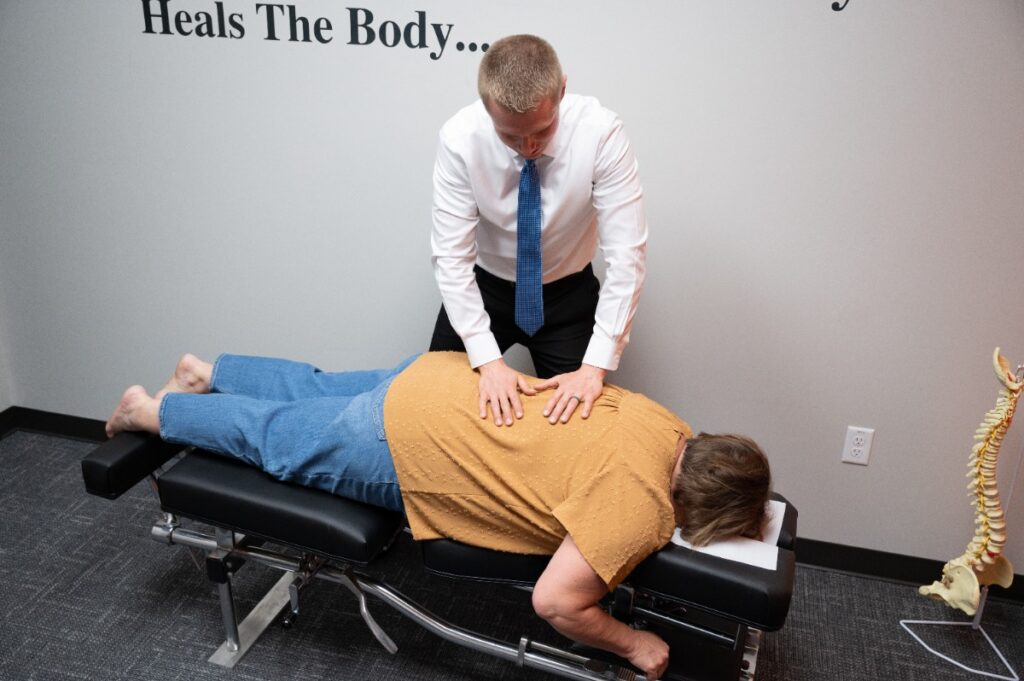
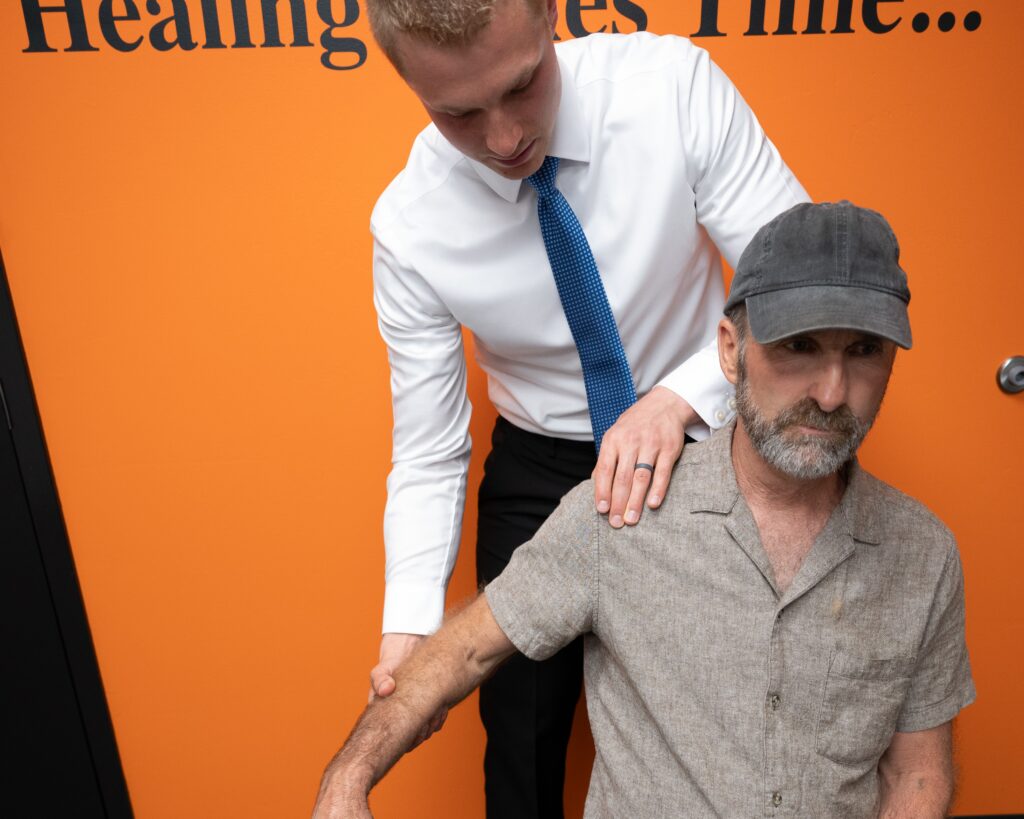
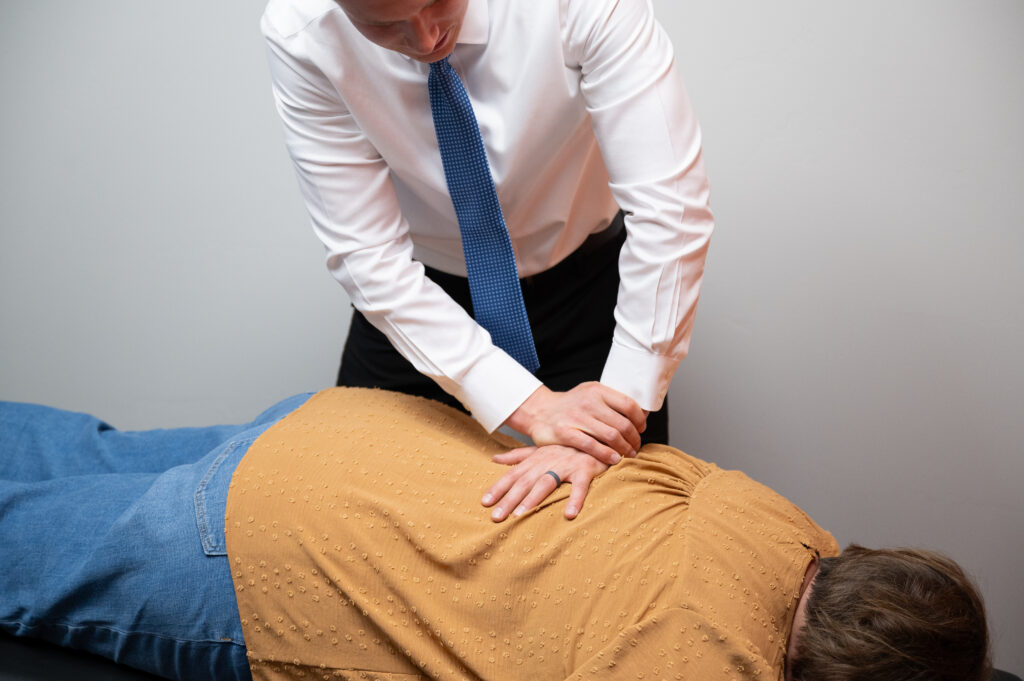
We’ll position you comfortably. That might be on your side or face down on a cushioned table. We’ll contact a specific joint and apply a gentle, focused pressure. Some techniques use a quick, precise impulse; others are slower and rhythmic.
You may hear or feel a small “pop” as gas releases from the joint. It’s similar to the sound when you open a sealed jar. It’s not bones rubbing or anything “cracking.” Some effective adjustments make no sound at all.
Most adjustments take seconds. We check in with you throughout, and we adapt if anything feels too intense. Afterward, many people feel lighter, looser, and able to move more freely. Mild soreness—like after a good workout—is possible and usually fades within a day or two.
Common Chiropractic Techniques for Back Pain
Every spine is different. We choose techniques that match your body, your comfort level, and the stage of your recovery.
Gonstead (manual adjustment): A classic hands-on, high-velocity, low-amplitude (HVLA) technique. It’s quick and precise, designed to free a restricted joint and restore motion. The Gonstead Technique is widely known as the Gold Standard within the chiropractic profession due to its results and specificity.
Safety, Comfort, and the “Popping” Sound
Safety comes first. We screen for conditions where certain techniques aren’t appropriate, such as acute fractures, severe instability, active infection, or suspected serious neurologic problems. If your situation calls for medical co-management or referral, we’ll explain why and help you take the next step.
Research suggests spinal manipulation can help reduce pain and improve function for many people with acute and chronic low back pain, and it is recognized as a non-drug, non-surgical first-line option in clinical guidance. See the American College of Physicians guideline summary and Cochrane reviews for context (ACP; Cochrane). For general safety information, the National Institutes of Health offers an overview of spinal manipulation (NCCIH).
About the “pop”: it’s a harmless release of gas within the joint fluid as pressure changes. It isn’t required for a successful adjustment. We focus on improved motion and function, not the noise.
How Chiropractic Care Helps Over Time
Many patients notice relief within the first few visits, especially with recent injuries. Long-standing or recurring pain often needs a structured plan to retrain movement patterns and keep joints moving well.
We’ll revisit your goals and function regularly. As your spine moves better, activities like sitting, lifting, golfing, or walking the trails around Green Bay usually become more comfortable. The plan adapts from relief to stabilization to maintenance, based on how you respond.
No two recovery timelines are identical. We’ll be transparent about your progress and what we can do to keep it moving in the right direction.
Practical Tips After Your Adjustment
Simple habits help your results last. Gentle activity keeps joints from stiffening back up, and small posture tweaks reduce daily strain. If we advise ice or heat, we’ll explain when and why for your specific case.
- Take a short walk the day of your visit. Sip water, avoid long periods of sitting, and change positions every 30–45 minutes. Use a lumbar support when driving. Sleep on your side or back with a pillow supporting neutral spine alignment. Keep upcoming heavy lifting smooth and close to your body—no jerky twists.
We’ll also discuss simple movements you can do at home to support your adjustment. Consistency matters. A minute here and there adds up over the week.
When to See a Chiropractor (and When to Seek Medical Care)
Consider chiropractic care when back pain limits your day—lifting at work, shoveling snow, yardwork, getting in and out of the car, or sitting through meetings. If stiffness keeps returning, if you’re relying on constant self-massage or stretching, or if you avoid activities you used to enjoy, it’s time for a thorough evaluation.
Seek urgent medical care if you notice red flags: new bowel or bladder changes, numbness in the “saddle” area, progressive leg weakness, back pain with fever or unexplained weight loss, history of cancer with new severe back pain, or significant trauma. If these appear during our evaluation, we’ll refer you promptly and coordinate as needed.
Chiropractic is frontline conservative care for spine-related pain. Our role is to restore motion, reduce irritation, and guide you back to confident movement—while staying vigilant for anything that requires medical attention.
Myths vs. Facts About Back Pain Adjustments
| Myth | Fact |
|---|---|
| Adjustments “crack bones.” | The sound is gas releasing in the joint fluid (cavitation), not bones rubbing. |
| You must hear a pop for it to work. | Successful adjustments don’t always make noise. We measure results by motion and function. |
| Once you start, you’re stuck forever. | Care plans are individualized. Some people come in for a short episode; others choose periodic check-ins to stay ahead of stiffness. |
| Adjustments are painful. | Most patients find them comfortable and relieving. Temporary soreness can happen, much like after exercise. |
| Chiropractic is only for severe pain. | It’s also effective for stiffness, recurring flare-ups, and movement issues before they become bigger problems. |
Our Green Bay Perspective and Next Steps
Green Bay stays active year-round—shoveling in winter, yard projects in spring, and cheering on game days. That’s a lot of lifting, sitting, and standing. Your spine needs to move well through all of it.
At 920 Chiropractic Health & Injury Care, we take the time to understand your back pain, then use targeted chiropractic adjustments to get you moving comfortably again. If you’re unsure where to start, a thorough evaluation is the best first step.
Have questions about your back, posture, or an old injury that keeps nagging? We’re here to help—right here in Green Bay.
FAQs
What does a chiropractic back adjustment feel like?
Most people feel a quick, precise pressure at a specific spot, often followed by a sense of relief or ease of motion. Some feel a small pop; others don’t. Mild soreness can occur and typically fades within a day or two.
Is the popping sound necessary for an effective back pain adjustment?
No. The sound is just gas releasing from the joint as pressure changes. We focus on improved movement, reduced guarding, and better function—not the noise.
How many visits will I need for low back pain?
It depends on your history, how recent the flare-up is, and how your body responds. Many feel improvement within a few visits. Long-standing issues often need a short, consistent plan followed by reassessment.
Can chiropractic help sciatica-related back pain?
Adjustments and related care can help when nerve irritation is driven by joint restriction, swelling, or faulty movement. We screen for red flags and refer if we suspect something requiring medical treatment.
Is it safe to get adjusted after a back injury?
We evaluate first. If your exam suggests it’s appropriate, we use techniques and forces that match your stage of healing. If something needs medical imaging or referral, we’ll explain and guide you.
What should I do after my adjustment to help it last?
Stay lightly active, change positions regularly, and use good lifting mechanics. We’ll provide simple, personalized strategies to support your results between visits.
TL;DR
- A back pain adjustment restores normal motion to spinal joints, easing irritation and helping you move comfortably.
- The visit is personalized: evaluation first, then precise techniques chosen for your body and goals.
- The “pop” is harmless gas release and isn’t required for success; we track improvements in motion and function.
- Safety is prioritized, with screening for conditions that need medical care and referrals when appropriate.
- Simple post-visit habits—short walks, posture changes, and smart lifting—help your results last.